‘My father was Saddam Hussein’s Minister of Defense’ said the driver congenially, and then he stared at us in the rearview mirror. We weren’t sure what we were supposed to say. ‘Sorry about that’? ‘Congratulations’? We settled on ‘Oh wow’ and I hoped he’d just change the subject. We’d only been in Iraq for about an hour, and we’d spent half of that negotiating the cost of the trip from the airport to the city. I wasn’t ready for uncomfortable political conversations just yet. ‘That’s why I can’t fly planes anymore. I used to be a pilot’ he went on cheerfully. As we drove past the perimeter of the Green Zone and further into Baghdad he pointed out a huge club where the infamous dictator and his son Uday used to party. Uday in particular was not a gracious host: he would force musicians to perform at all hours and tortured soccer players who didn’t want to come. Not the sort of hospitality Iraq is known for, today.
We got out of the cab in front of a hotel just off Sadoun street. The driver put his number in Oyv’s phone and told us to call if we needed anything, and then he drove off.
Baghdad, one-time capital of the Muslim world, was founded in the 8th century. At this moment the ‘City of Peace’ was enjoying another (possibly self-declared) title: ‘Capital of Arab Tourism 2025’.
‘That’s interesting’ we thought, and with the major tourist attractions in mind, set off to explore. But despite that lofty designation, the tourist attractions were mostly closed. It didn’t matter: we strolled along the Tigris and rambled in the hectic streets. We drank chai and browsed in the stacks at the booksellers that line Al Mutanabbi street.
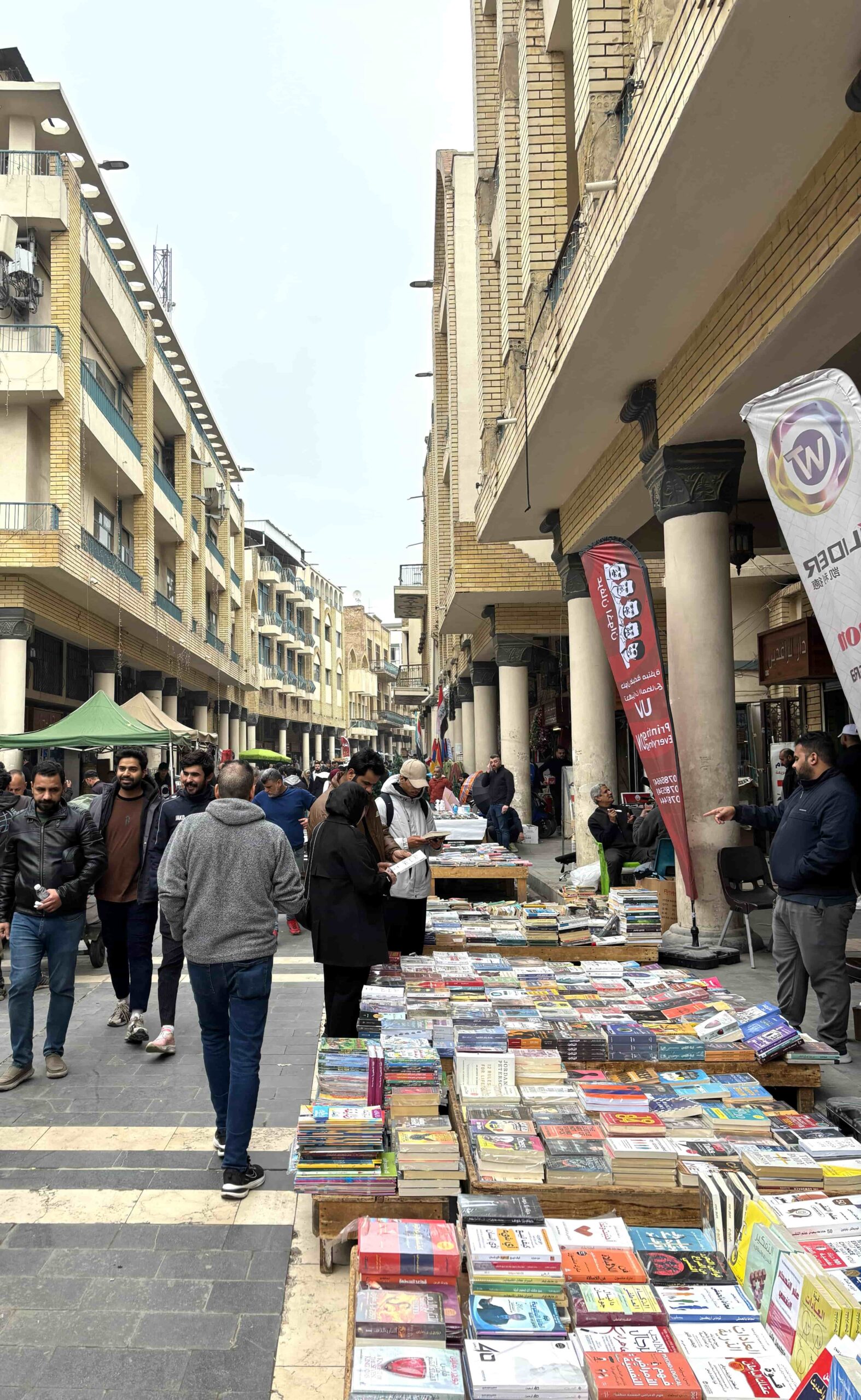
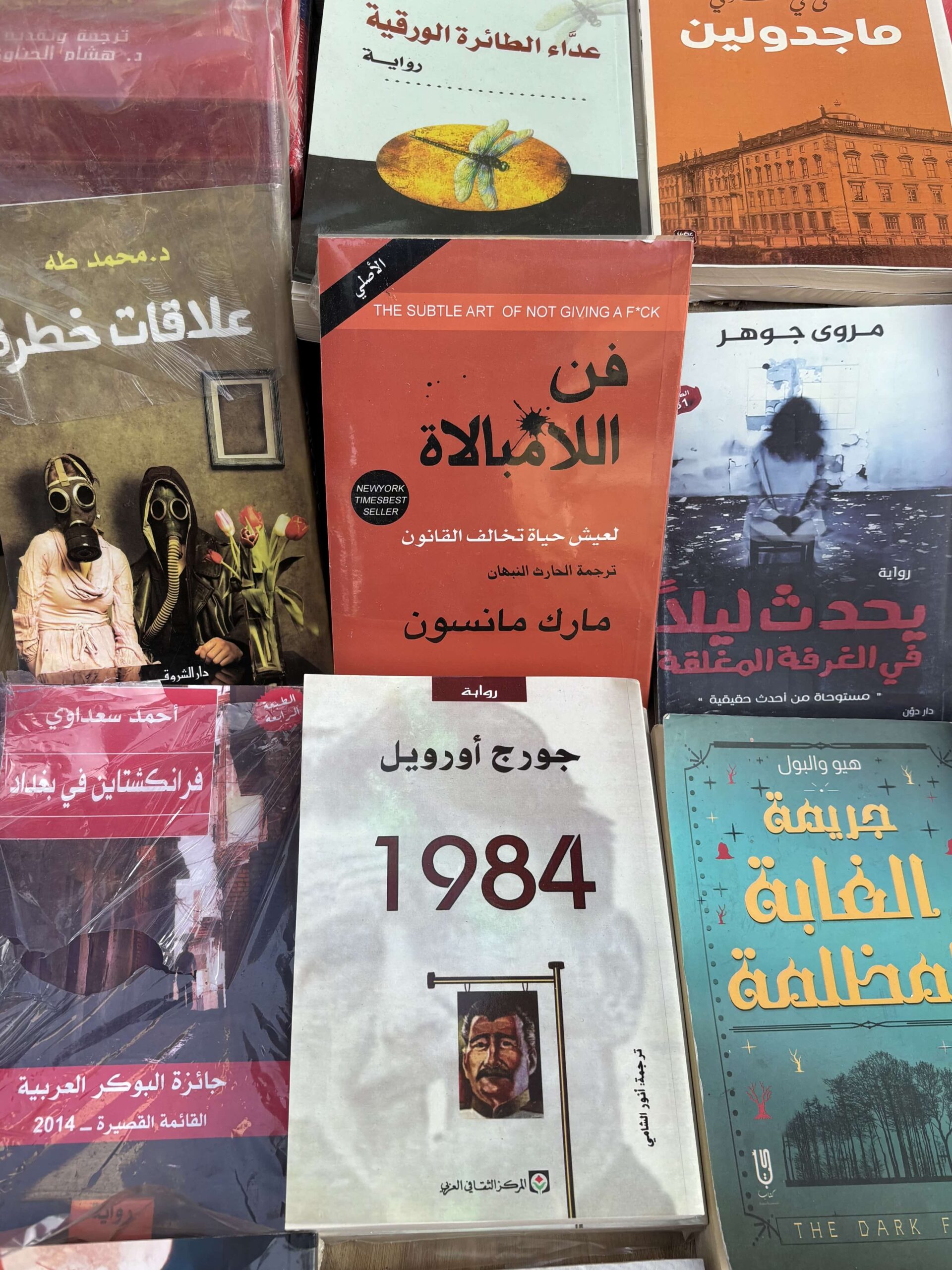
We went to Iraq in part for its jaw-dropping 7000 years of history. But we also wanted to experience Iraq’s well-known culture of ingrained hospitality. And after a couple of days of getting turned away from closed monuments in Baghdad but warmly welcomed by nearly every person in the street, we set off for Mosul.
Rising from ashes
We’re no strangers to police checkpoints. Good thing too, because there were many on the way to Mosul. The only problem we had at one of them was with a soldier lounging barefoot on a sofa in his office in a dense fog of shisa. He questioned us about our plans, and then he frowned deeply and took a long pull on the waterpipe. Finally, he revealed the reason for his reluctance to give back our passports and send us on our way: he didn’t like our choice of hotel. He tried to dissuade us from going. Not to Mosul, just to that particular one-star hotel.
At reception in the hotel where we went anyway, the power went down as Oyv tried to pull our marriage certificate out of the cloud (the power went down a lot). In the darkened lull, since we couldn’t check in to a double room without proof of our marital status, we asked the receptionist if he gets many foreign tourists. ‘Lots! Europeans. Not tourists. Friends’ Mustafa answered. ‘Have some now in fact’ he added, as a couple walked in the door. ‘I just told them there are lots of tourists from Europe here’ he announced to the couple. ‘And here we are’ said the woman. Despite Mustafa’s claim that the city was practically overflowing with Europeans, we met one other traveler in Mosul and would spot only a handful more the entire time we were in Iraq.
The power came back on and Mustafa leaned in closer across the desk. ‘Can I ask you something? Why do Europeans always feel better when they see other people like them?’ I tried to explain that we were just curious about the state of tourism in Iraq, but Mustafa was convinced we were terrified of his hometown. So he expounded on Mosul’s safety, general awesomeness, and the extreme hospitality of its people. As proof of every Mosuli’s generosity, he insisted we guzzle sugary tea and take his whole pack of blueberry cigarettes.
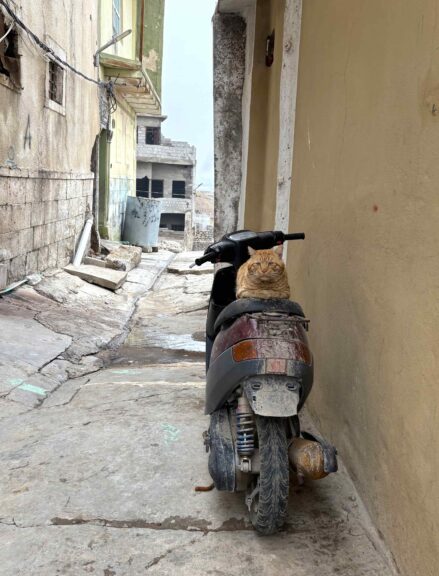
But Mustafa wasn’t exaggerating, as we saw the second we went outside. Iraqis are welcoming in general but almost no where is this trait more apparent than in Mosul, where resilient citizens rebuild every day but still have time to offer snacks and kindness to strangers. Wherever we went, people invited us to tea, wished us welcome, asked if we needed anything, and kindly said it was good to see us.
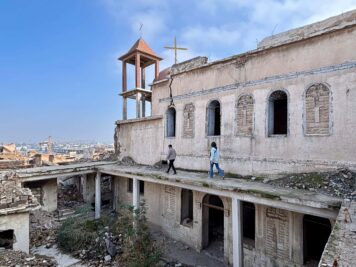
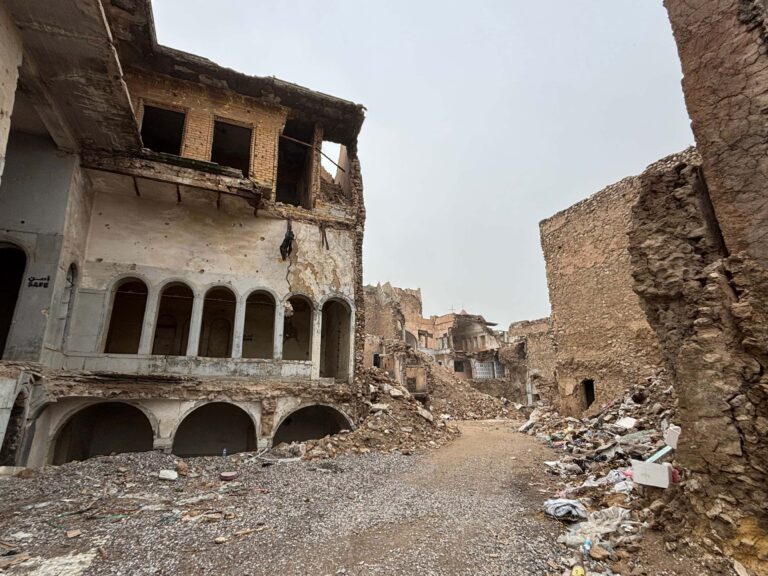
ISIS captured Mosul in 2014. By the time the army ousted them in 2018, around 70% of the old city was destroyed in the fighting. During the occupation, suicide bombings were regular occurrences, schools and businesses closed, life ground to a halt. In the final months citizens retreated to underground bunkers and existed as best as they could while their neighbourhoods were blown to bits, hundreds of years of history and culture literally razed to the ground around them.
We hired a local guide to show us around what’s left. Osama spent three months in 2017 living in a bunker under his house with two other families while the coalition forces fought ISIS in the streets out front.
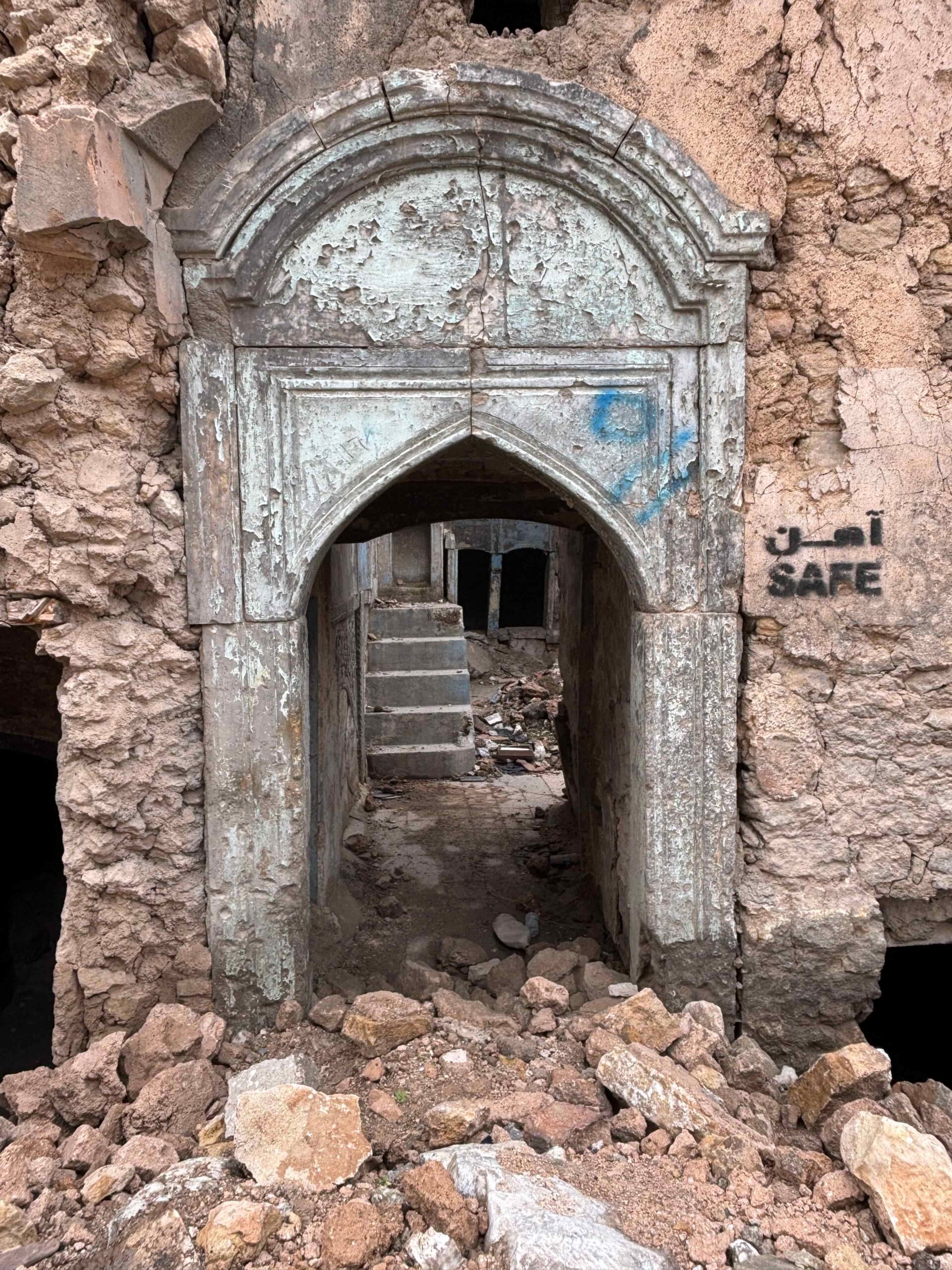
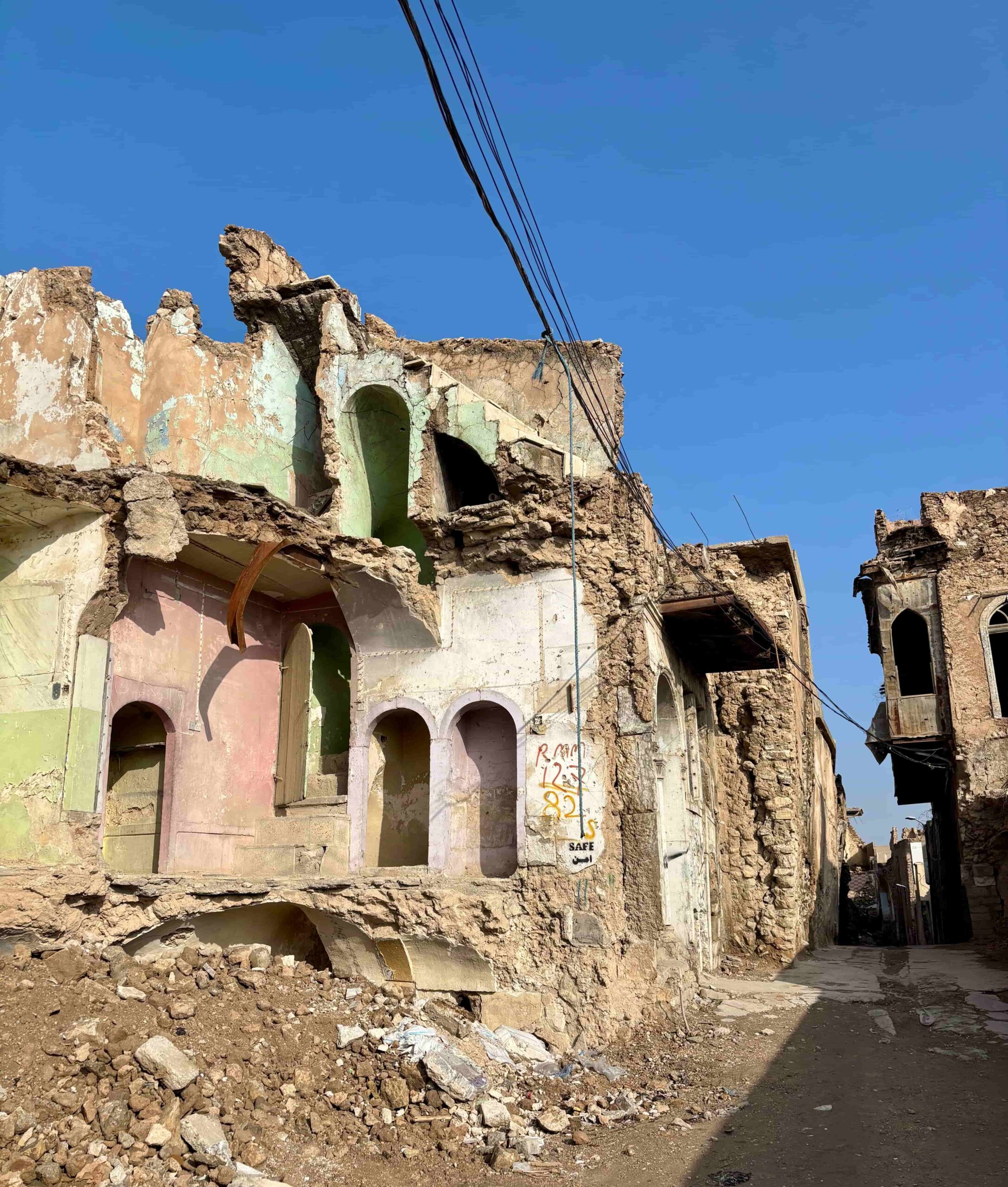
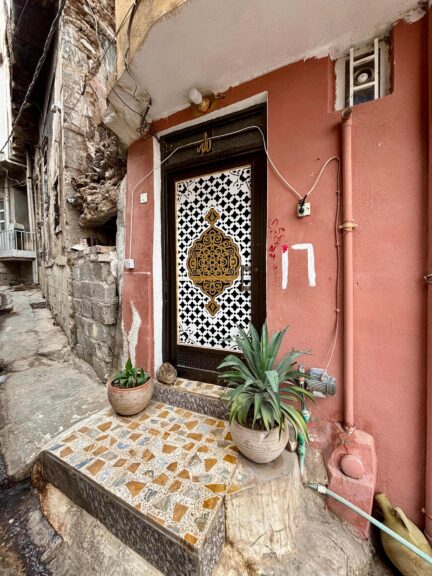
Some families live in the old city still. They just stayed there the whole time. Others, with nowhere else to go, have moved back into the bombed out shells splattered with bullet holes, and live amidst the mountains of concrete rubble, twisted metal and tangled wire that once amounted to homes and lives.
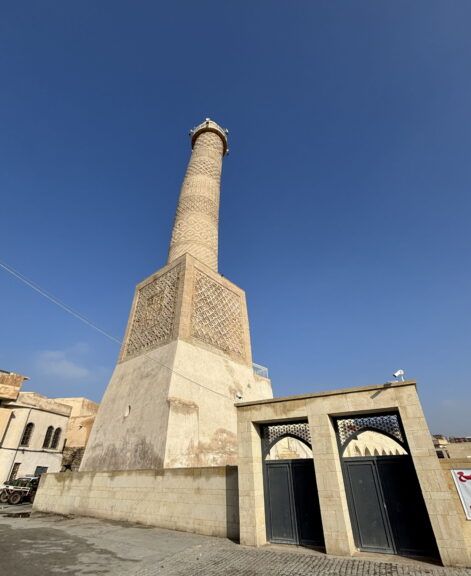
There’s constant reconstruction underway. We stood outside of Nouri Mosque with Osama and looked up at the ‘hunchback’ – the minaret leans slightly to one side. ISIS self-declared their ‘caliphate’ right here in 2014. Their black flag flew from the tilted minaret right up until the Battle of Mosul in 2017, when they completely destroyed the mosque themselves rather than lose it. But as of 2025 Nouri Mosque stands newly rebuilt, just as it was before – right down to the leaning minaret.
Cities between the rivers
Baghdad wasn’t always the capital of both Iraq and of Arab tourism. Around 836 AD the Caliph Al Mutasim designated Samarra capital of the Abbasid Empire. Then he devoted himself to building a glorious city to reflect his own greatness. After a brief moment in the sun – fifty-six years, to be exact – his city was suddenly deserted and the capital moved back to Baghdad.
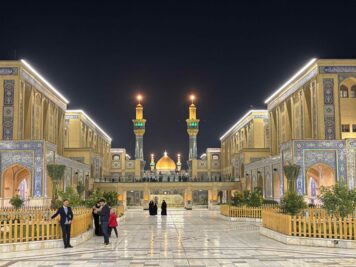
Today Samarra is a holy city for Shia Muslims: the Al-Askari mosque enshrines the tombs of the 10th and 11th imams. But the town’s population is largely Sunni and security – which there is a lot of – is shared between an Iranian militia and the Iraqi army. ISIS left their mark on Samarra as well, attacking in 2014 although they never captured the town. Army presence, blast walls, razor wire and sandbags, all point to Samarra’s complicated history and relatively recent tensions.
If you’re thinking all this sounds like the perfect place to grab some lunch – well, it is. We met a friendly family and ate with them in the utilitarian dining rooms at the back of the mosque. The kitchens feed visitors all day long – for free. Women and men eat in separate rooms so I went with Fatima and her daughters, and Oyv disappeared into the men’s side with Ali and his son. And with Hossein, the taxi driver who’d brought us through all the Samarra checkpoints in the first place and now seemed reluctant to let us go anywhere by ourselves.
A huge spiral minaret stands beside the Great Mosque of Samarra, just down the road from Al-Askari. At times you can climb the minaret – but not at the time we were there. It was closed and we could only look at it from behind a fence.
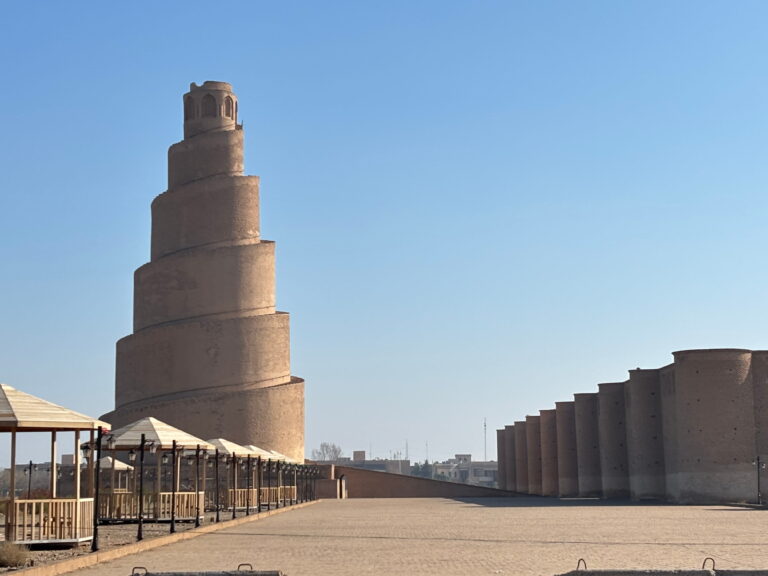
Still, nobody ever said (to me, anyway) that traveling in Iraq was a ‘been there, done that’ checklist of historical sites. To be fair, nobody ever said anything to me about traveling in Iraq, period.
Except Iraq is full of historical sites. This is Mesopotamia, the land between two rivers, the cradle of civilization, and Samarra is not the only ancient city.
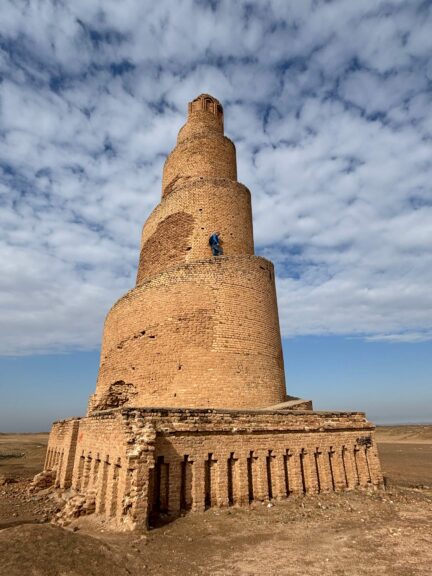
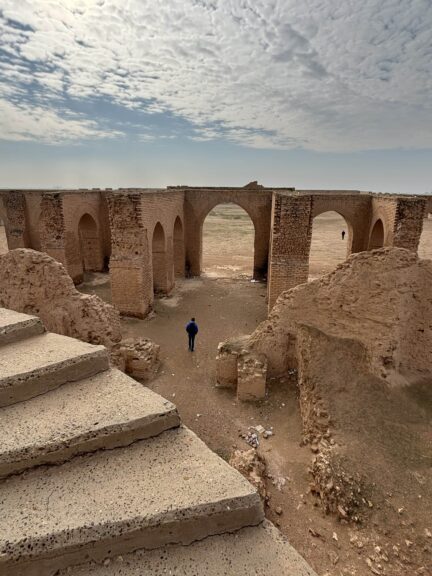
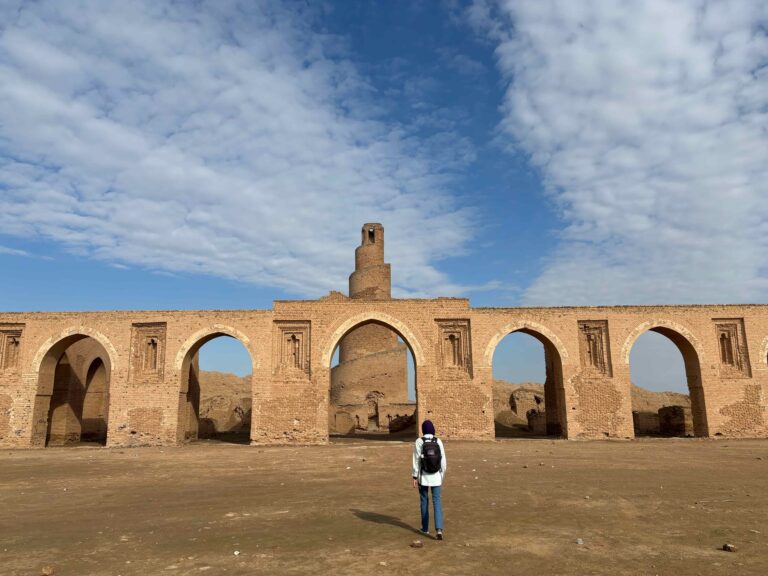
We got Hossein to take us to Abu Dalaf mosque. There, a spiral minaret stands on the site of Jafariya, another 9th century Abbasid city. We climbed that minaret on a steep and twisting ramp, and looked at the desert below stretching away on all sides. There was no one in sight except for Hossein, who’d accompanied us to the bottom of the minaret but shook his head and wandered off when I asked if he was planning to climb it.
And not far from Mosul there’s Hatra. It was the capital of the first Arab-ruled kingdom, wedged between the Parthian and Roman Empires. Once prospering in a string of famous cities like Palmyra, Baalbek, and Petra, Hatra was deserted by the middle of the 3rd century AD.
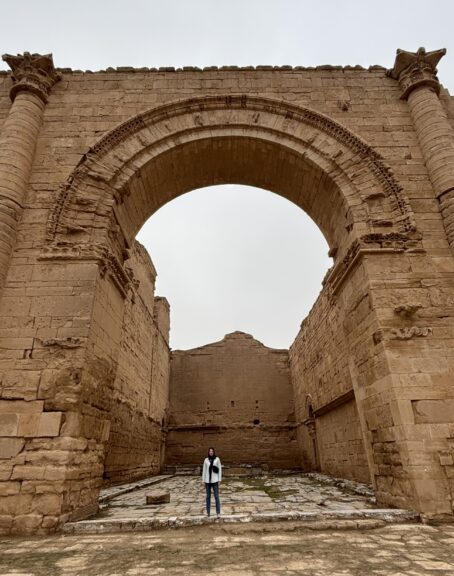
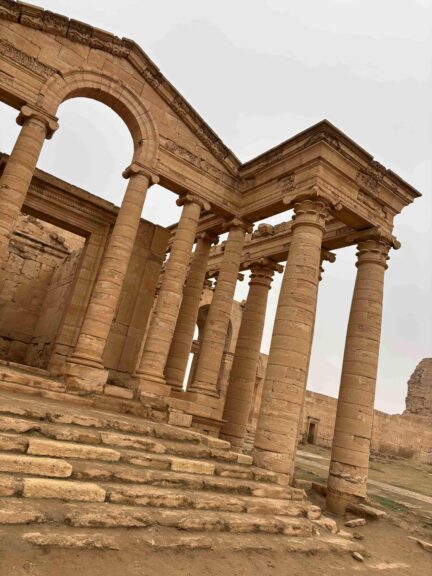
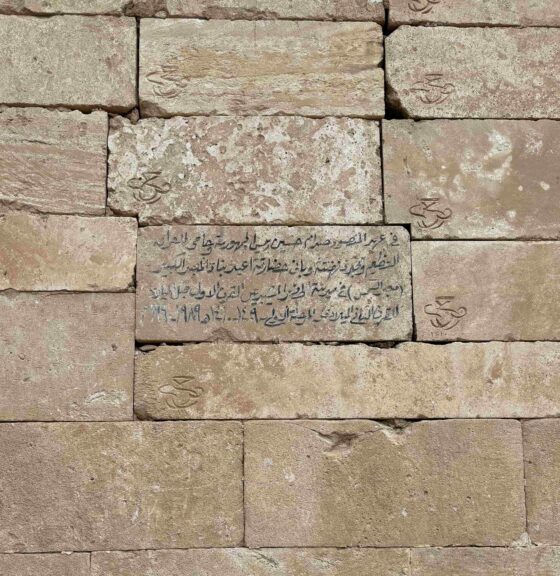
In the 1980s Saddam Hussein ordered some restoration and wasn’t shy about taking credit: new bricks stamped with his name are scattered around the site.
More recently Hatra was attacked by ISIS who tried to bulldoze large parts of the site in 2015, as part of their campaign to erase Arab history and culture. Overall they weren’t that good at it. They destroyed some statuary and riddled the walls with bullet holes, but most of the ancient city is still intact. We’d already got used to somebody nodding and saying ‘Daesh’ whenever we looked questioningly at a pile of bricks partially covered in a tumble of barbed wire.
And then there’s the most famous city between the two rivers: Babylon.
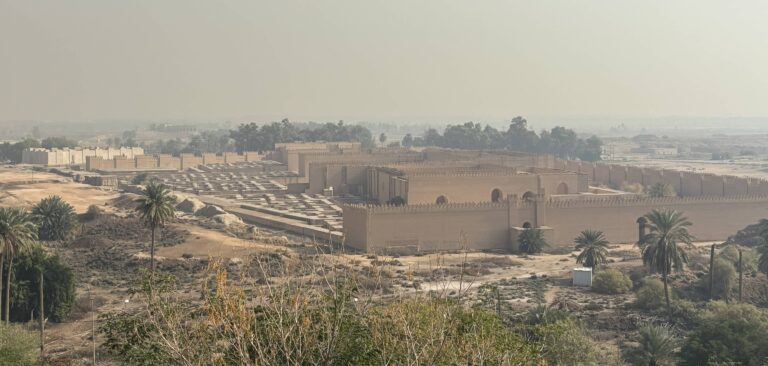
‘Babylon the great, Mother of Harlots and the abominations of the earth’, as it’s called in the Book of Revelation. The city had been standing there next to the Euphrates for nearly 2000 years by the time King Nebuchadnezzar II set his sights on it around 600 BC. The King’s idea was to Make Babylon Great Again – the most magnificent city in the world. It seems he succeeded, considering we’ve all heard of his work – the Hanging Gardens anybody? – even though there’s no trace of those left today.
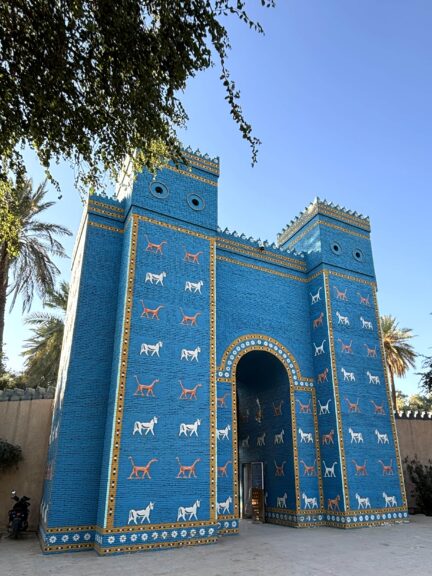
Nebuchadnezzar died in 562. Decline and destruction (and a spate of Zoroastrian fanaticism) left the city in bits and pieces by the time Alexander the Great turned up. He died in Babylon in 323 BC, and the city changed hands again and again as Empires came and went.
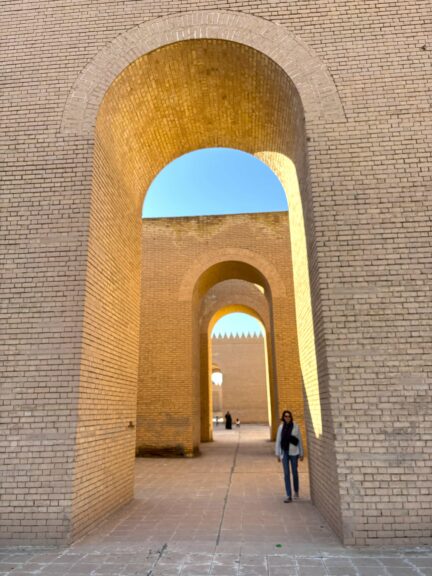
Hulagu Khan and his Mongol hordes descended on Mesopotamia in 1258, kind of like ISIS only without the bulldozers. They massacred the entire population of Baghdad and much of the surrounding countryside. After Timur swept in and unleashed another round of epic violence in 1401, there was nothing much left of Babylon, or anything else in the area for centuries.
In the 1980s Saddam Hussein ambitiously set about restoring Nebuchadnezzar’s huge palace to its original glory. And just as the King had had bricks stamped with his name, so did Saddam. Both can been seen today.
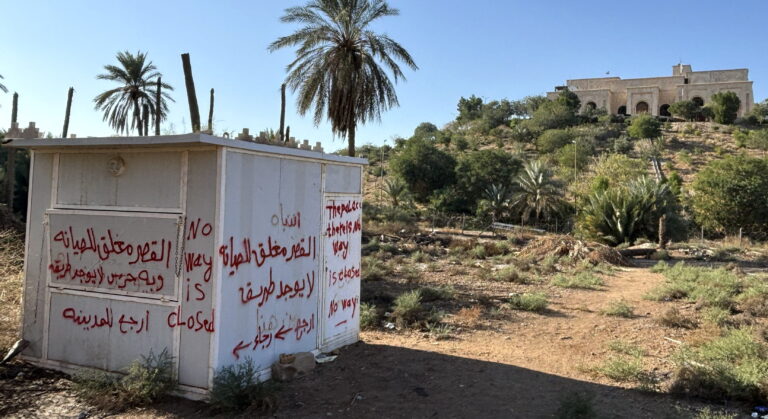
While he was at it Saddam had a palace built to look at Babylon from, like a modern-day Nebuchadnezzar. Now empty and abandoned, the palace looms over the silent kingdom of the distant past.
Just another day…
While staying in Najaf we made friends with a local. Ibrahim took us to his house and out for lunch, we met his family. He picked up a huge fish in the souk, had it grilled on the spot, and we ate it on the banks of the Euphrates after a quick spin on a passerby’s boat.
If ever we had a language issue, Ibrahim just called his friend Mina – in Vienna – and she translated. ‘He has the keys to Iraq’ said Mina, when I told her that he’d gotten the caretaker at an ancient mosque to unlock a heavy old door in the corner and let us go downstairs. The shrine underneath the mosque is thought to be built overtop of the grave of Ezekiel, an Old Testament Prophet. But someone named Dhul-Kifl appears in the Koran, and since it’s potentially the same person, the sanctity of this shrine has gone back and forth between Judaism and Islam since at least the early 14th century.
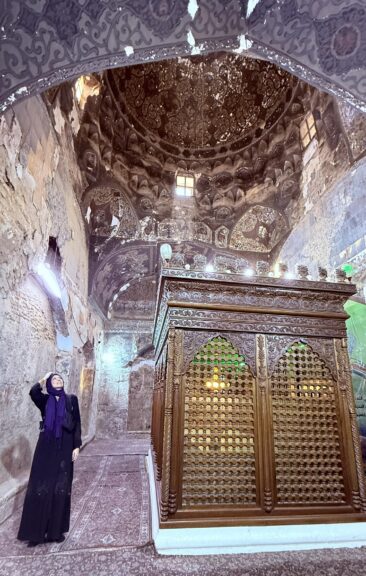
Altogether, this was absolutely one of our favourite days in Iraq. It captured perfectly the essence of this hospitable country and its welcoming people.
As we strolled in an old brick-arched souk looking for a suitably huge fish and talking about our families, Ibrahim drew his finger across his throat. His father, a teacher, was killed in Saddam’s purges in 1991. We’d planned to go to Saddam’s abandoned palace after lunch. ‘Forget it Ibrahim, let’s drop the palace’ I said. But Ibrahim shrugged – he wanted to take us there.
Getting into the palace is easier said than done: it’s closed to the public.
But with Ibrahim we walked around Ishtar gate at Babylon and into a family park. ‘They see you as Iraqis, with me’ said Ibrahim and he grinned and waved at the guards standing next to the gate. Not to say that he hadn’t done a lot of smooth-talking to get us that far: the guards managing the site weren’t as excited about the prospect of urbex-times-a-million as we were.
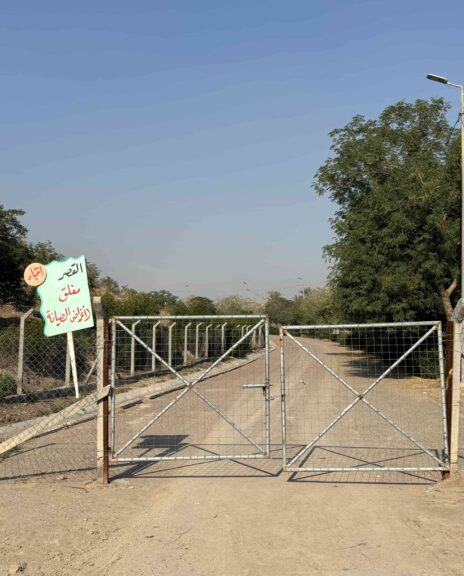
From the family park we carried on to the fenced entry to the palace grounds and after some more smooth-talking persuasion from Ibrahim, we were in, scrambling up the hillside and into the monstrous, abandoned relic.
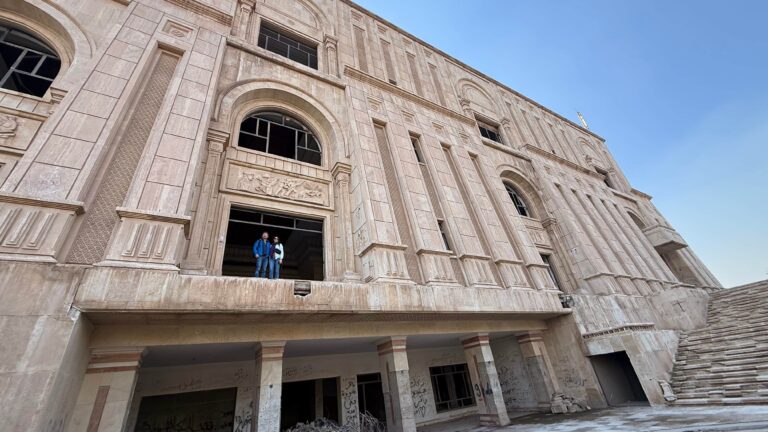
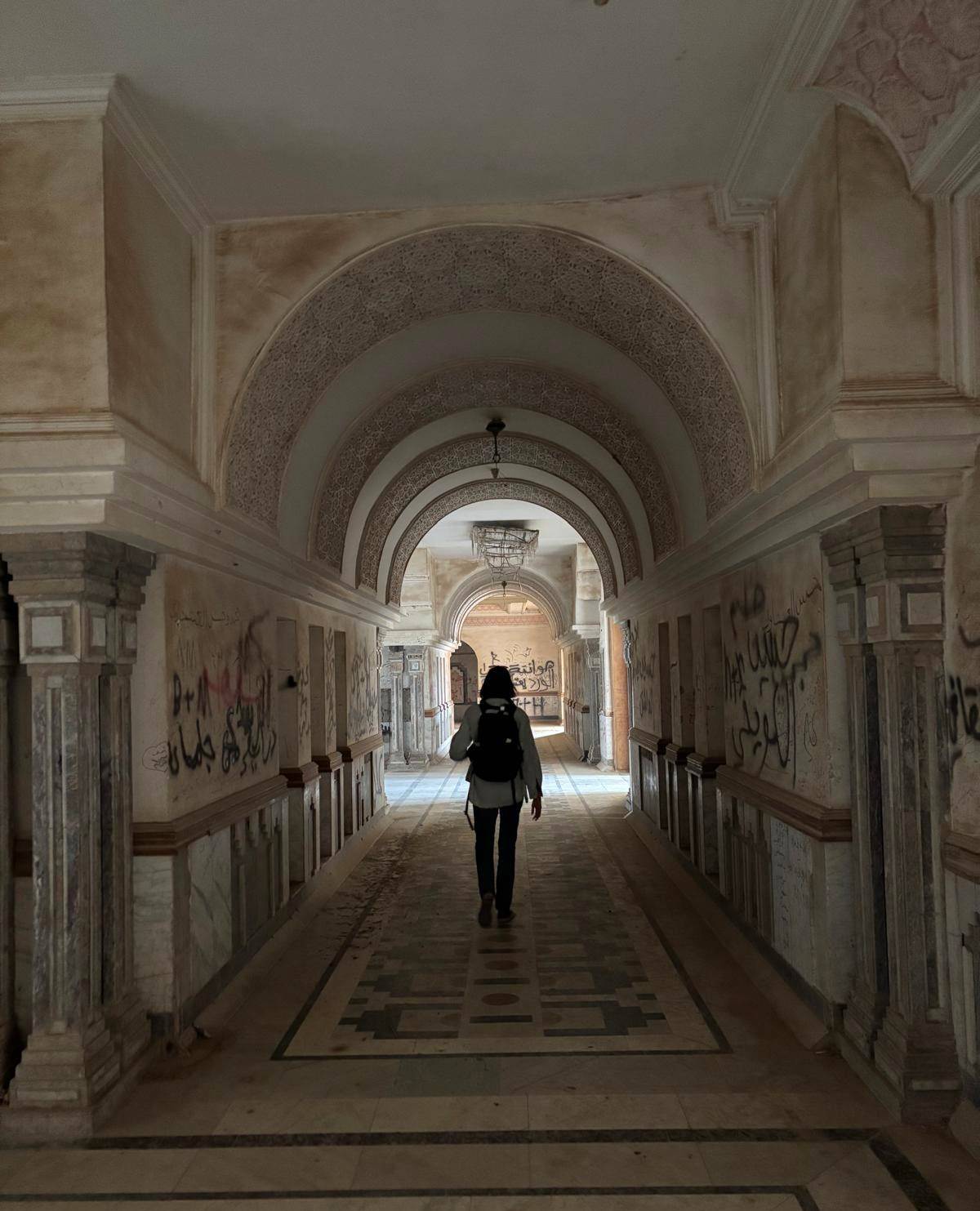
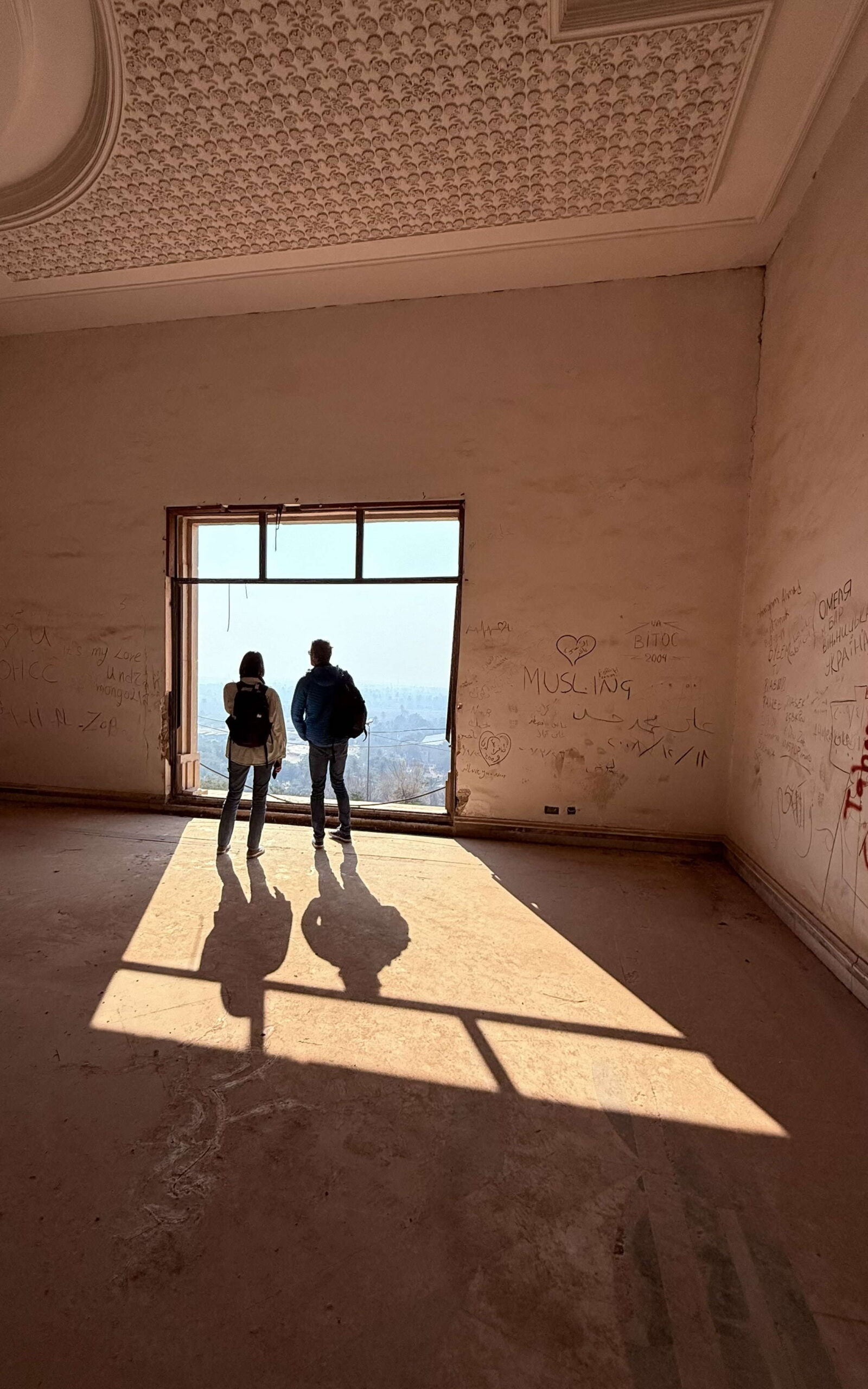
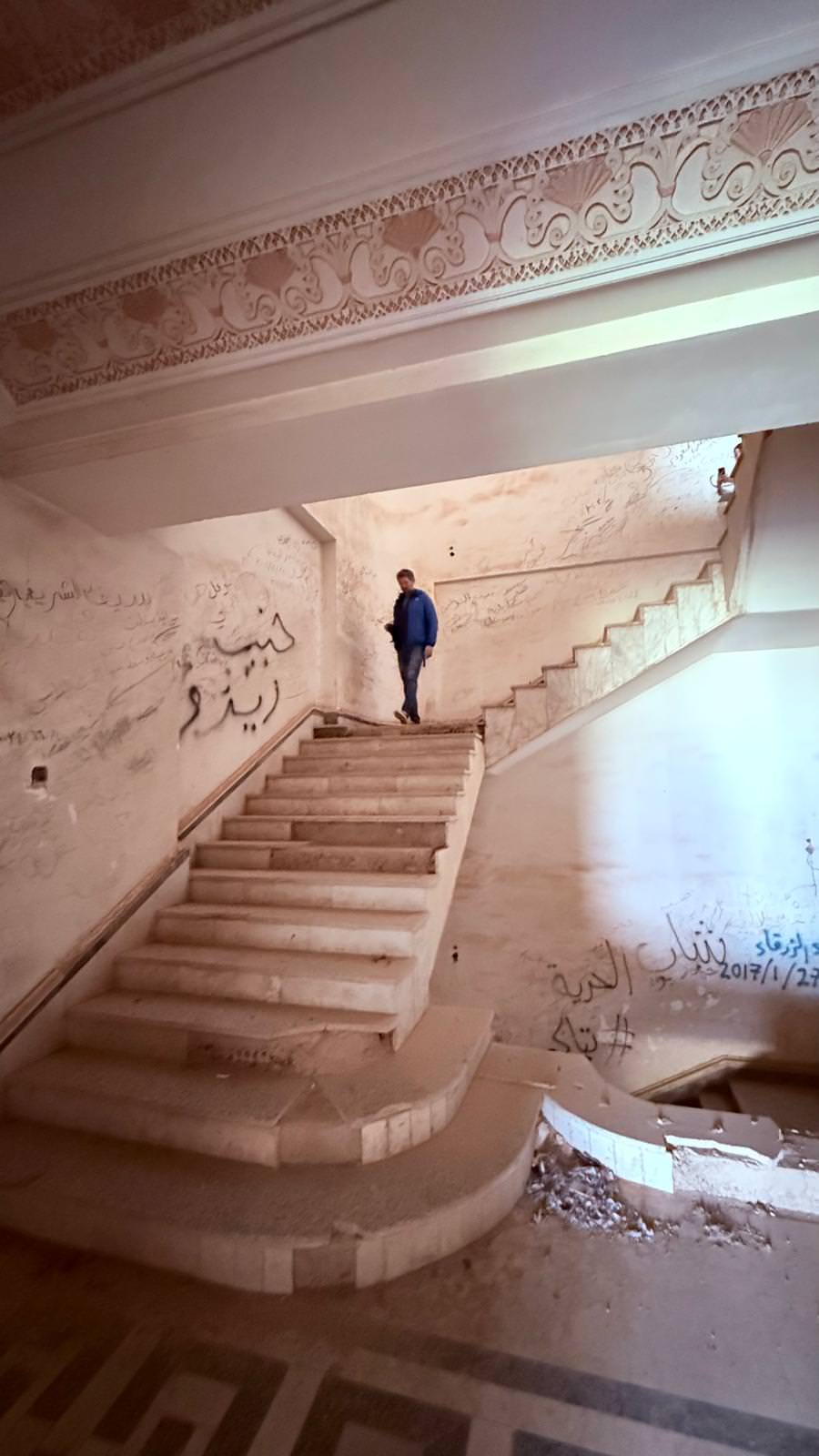
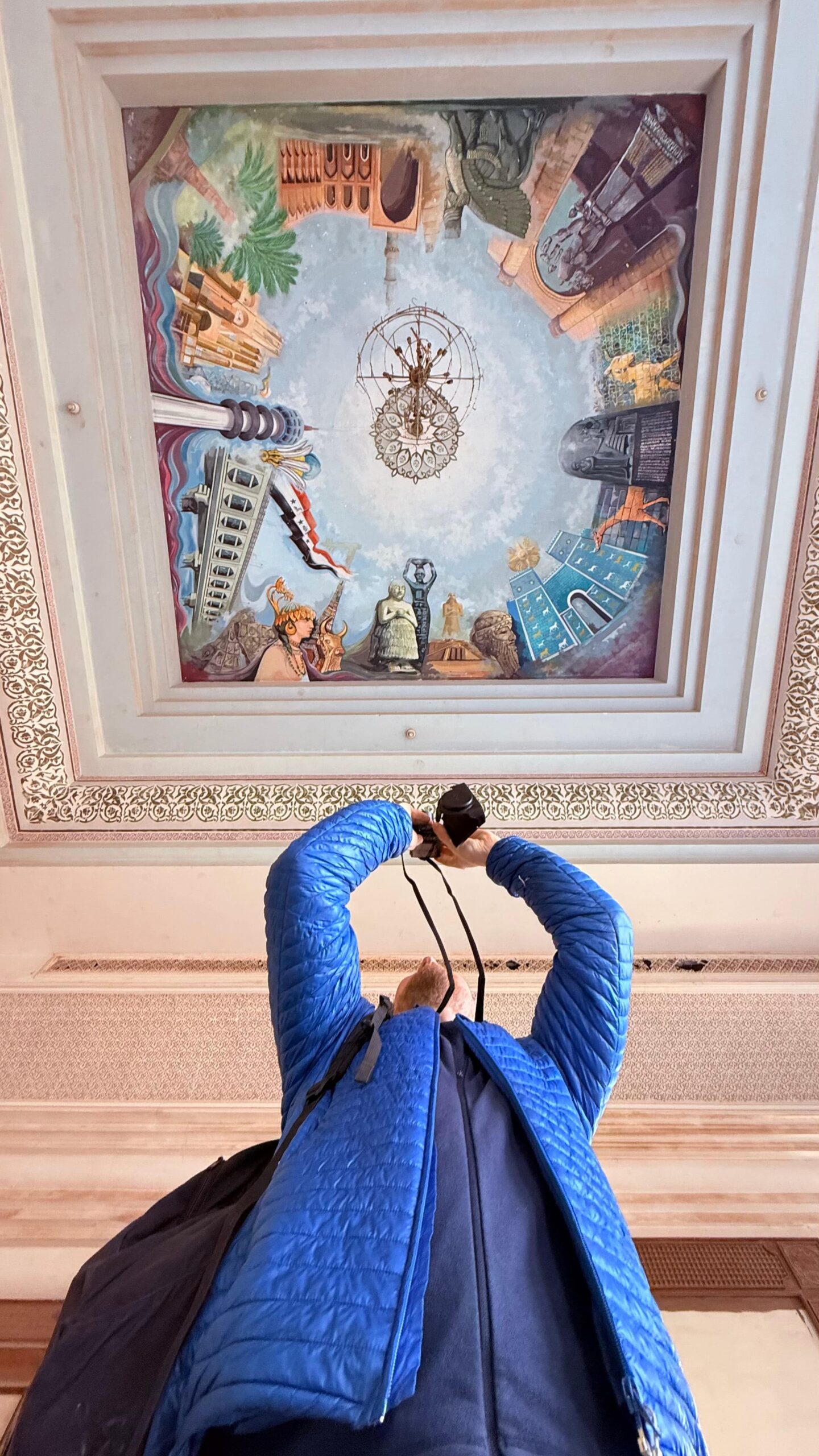
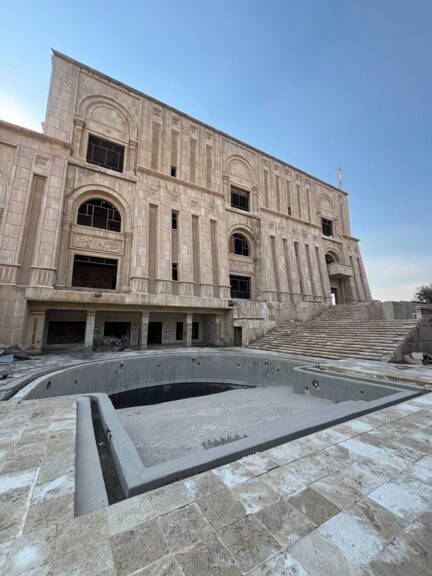
Together we prowled through the vast rooms, and climbed the exposed staircases to the very top of the palace for another look at Babylon.
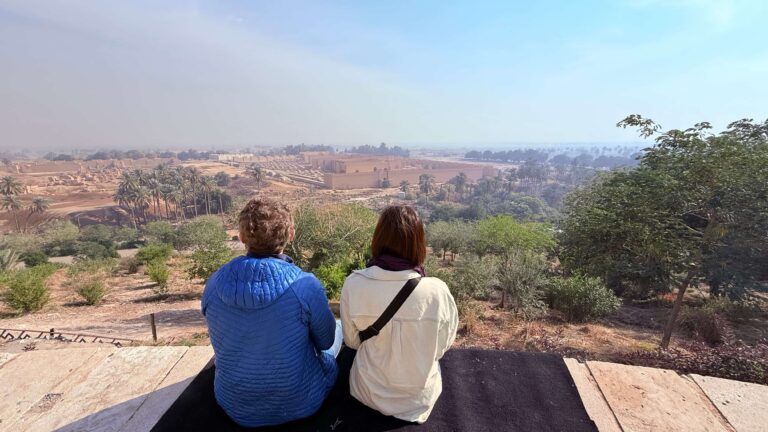
But while we were busy admiring the view over Saddam Hussein’s empty swimming pool, somebody closed the fence down below.
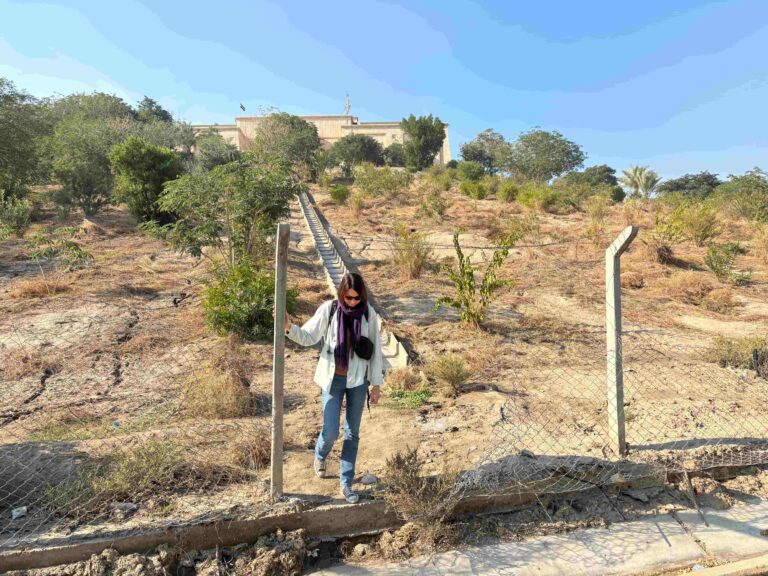
Actually, they chained it shut.
Back down, we stood locked inside the grounds and wondering what to do. Even Ibrahim looked a bit flustered, probably since we’d managed to get stuck inside the one place in Iraq he didn’t have the key to. I eyed the lock with mild panic which intensified slightly when a police officer appeared on the other side of the fence. He didn’t have the key either.
But in the spirit of true Iraqi hospitality the police officer and a couple of bystanders pried the gates apart and indicated that I should just slither through. As I wiggled through the gap in the fence in front of the families picnicking in the family park, a random man turned up with a key and unlocked the gate.
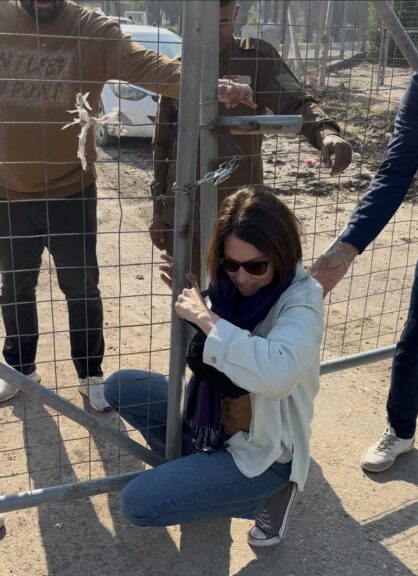
It’s not every day you find yourself wandering around a dictator’s abandoned palace, gazing out the dusty windows at Babylon. And then locked inside, to top things off. But it is just another day when you’re traveling in Iraq.
But wait, there’s more
Just the mention of ‘Mesopotamia’ brings to mind ancient civilization. Never once have I thought of ‘wetlands’ although it stands to reason they’d be there, between the rivers.
Saddam Hussein had the Mesopotamian marshes drained in the 1990s. Then he built military access roads on top of them – despite the Marsh Arabs who had been living there for centuries. These families who lived in reed houses on the water were forced to leave their homes and make their way somewhere else.
After the Ba’ath regime fell, the dams diverting the Euphrates were destroyed. As the water came back so did the Marsh Arabs. They returned to their reed houses and traditional way of life, fishing, herding water buffalo, producing milk and cheese.
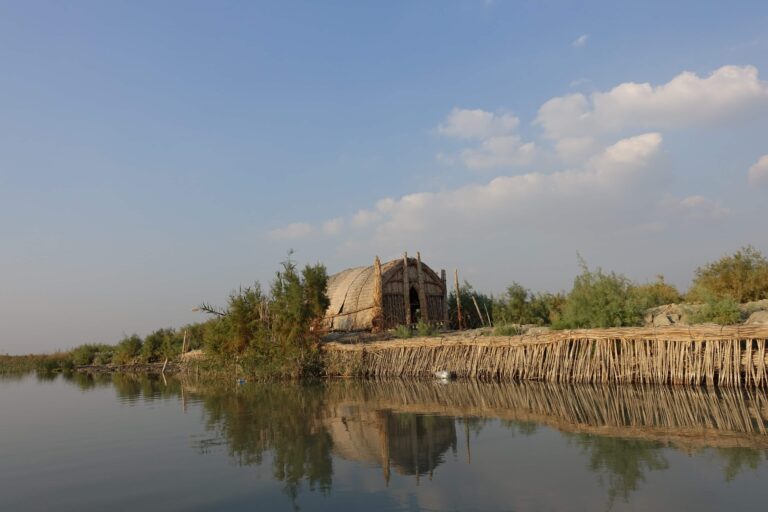
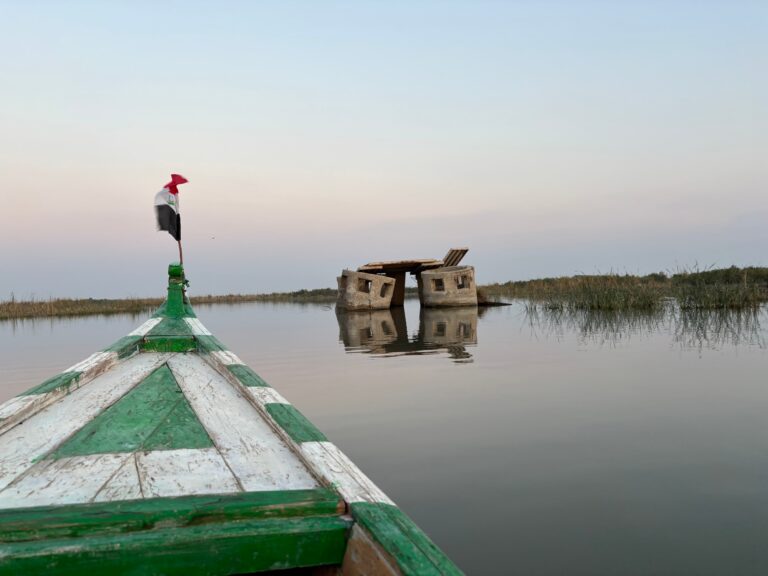
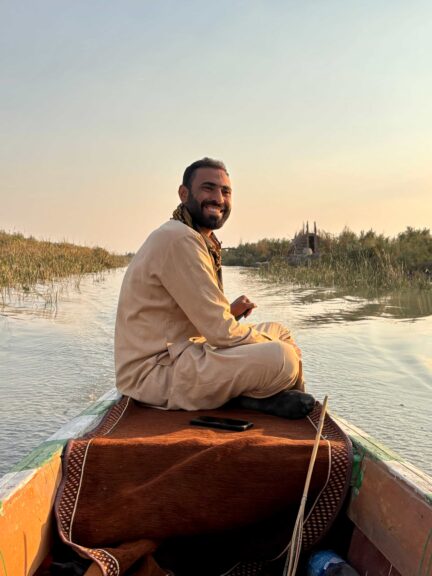
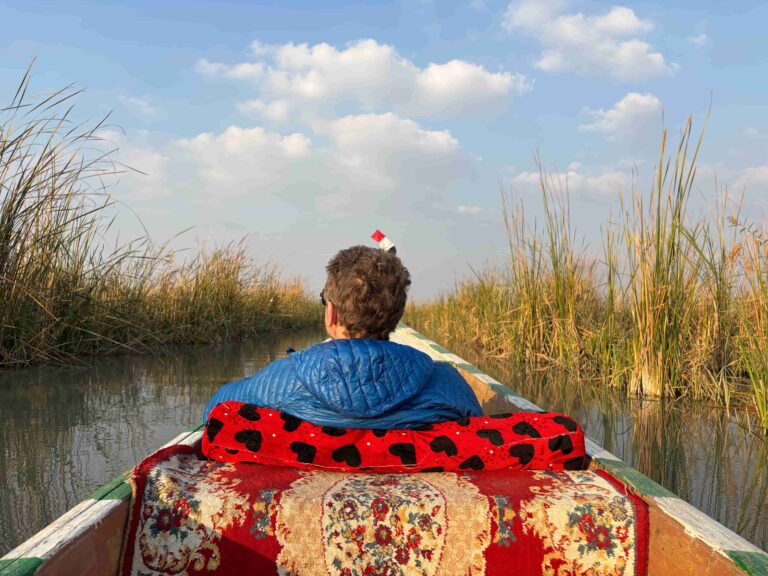
We strung together a minibus and a few more share-taxis to Al Jubayish, where we met Ali at his reed house that’s now a guesthouse. And then we had a look at still another side of Iraq: from a boat drifting in the reedy channels of the marshes at sunset, followed by masgouf fish and chai around a smoky fire on the riverbank.
Eventually we reached Basra, our last stop before the border with Kuwait. As we sat in the hotel lobby eating one more breakfast of dates and fresh cheese, the hotel receptionist came over to us, with a friend in tow. ‘Hei, hvordan går det?’ said the friend. Back home for a visit, he’s been living in Norway for years. Where we’re from and what we’re doing is generally known to everyone in the vicinity a few minutes after we arrive anywhere and the receptionist was obviously delighted to have found this Norwegian-speaker for us. The receptionist just wanted to check, the Iraqi-Norwegian went on, if we needed anything at all. We thanked him, but we were fine. Christmas was approaching, and later that day we were going to the Basra Family Park for the Christmas market.
Yes, in Iraq.
At the Christmas Market we stood next to a huge inflatable snowman, listening to Jingle Bells on repeat, surrounded by happy families. Out the corner of my eye I saw a boy visibly mustering up his courage. When I smiled at him, his dad nudged him forward. He came over, shyly offered his hand, and said ‘It’s good to see you here. Welcome to Iraq.’
Read more
I’ve written a lot about our travels in Iraq, including guides for daytripping to some of the places I’ve mentioned here in this story. If you’re going to Iraq, check out our guide to independent travel in Iraq. And if you’re crossing the border to Kuwait, have a read here.
Check out the Destinations page for travel guides and stories about our off-beat adventures all over the Middle East and beyond.