Around 836 AD the Caliph Al Mutasim designated Samarra as the capital of the Abbasid Empire. Then he devoted himself to building a glorious city as a reflection of his own greatness. After a brief moment in the sun – fifty-six years, to be exact – his city was suddenly deserted and the capital re-established in Baghdad.
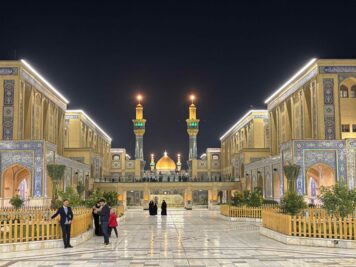
Today, Samarra is a holy city for Shia Muslims: the Al-Askari mosque contains the tombs of the 10th and 11th imams. However the town’s population is largely Sunni and security – which there is a lot of – is shared between an Iranian militia and the Iraqi army, and so religious tensions can run high. After the fall of Saddam Hussein, Shia Iraqis retreated to their holy city and outbreaks of sectarian violence followed. ISIS left their mark on Samarra as well, attacking in 2014 although they never captured the town.
In recent years it’s been hard for visitors to get to Samarra. You needed special permission and a guide, or at least a local friend to help you out, but this doesn’t seem to be the case anymore.
There are no hotels in Samarra (that accept foreigners anyway) but you can sleep overnight in the Al-Askari mosque. However the atmosphere in Samarra is infamously kind of strained and you’re probably better off just daytripping from Baghdad.
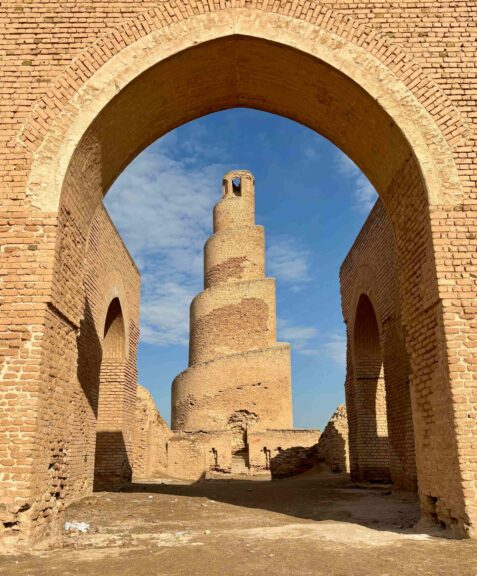
This post is about daytripping to Samarra: how we arranged to go there from Baghdad, and then carried on to Karbala afterwards.
What to see in Samarra
Besides visiting the impressive shrines at Al-Aksari mosque itself, there are at least a couple of other points of interest in and around Samarra.
Right in town and down the road from the Al-Askari mosque is the Great Mosque of Samarra, also known as Malwiyya mosque for the spiral minaret that stands beside it. You can at times climb the minaret for amazing views – but not at the time we were there. It was closed and we could look at it only from behind a fence.
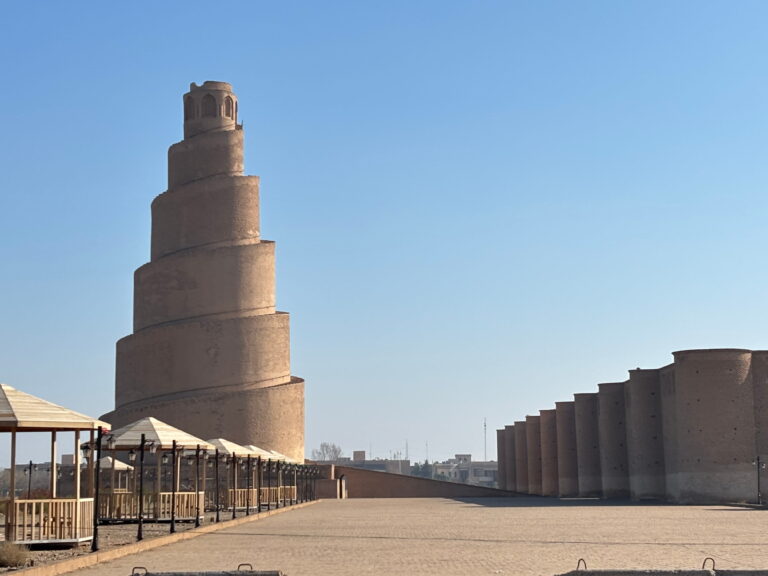
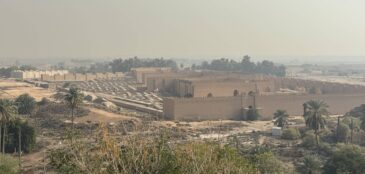
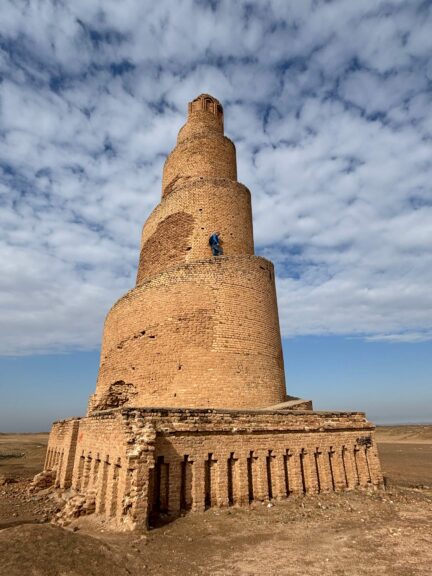
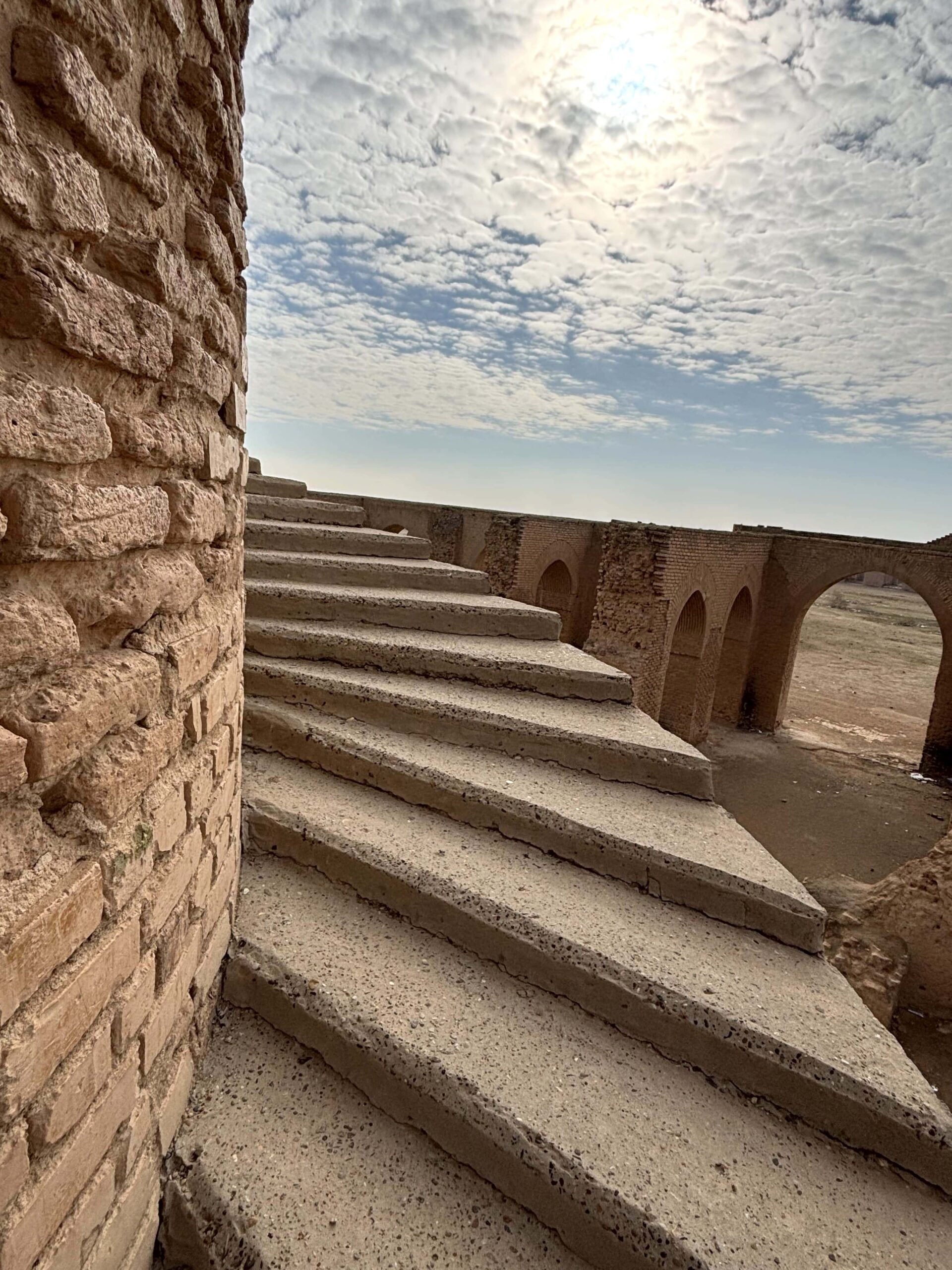
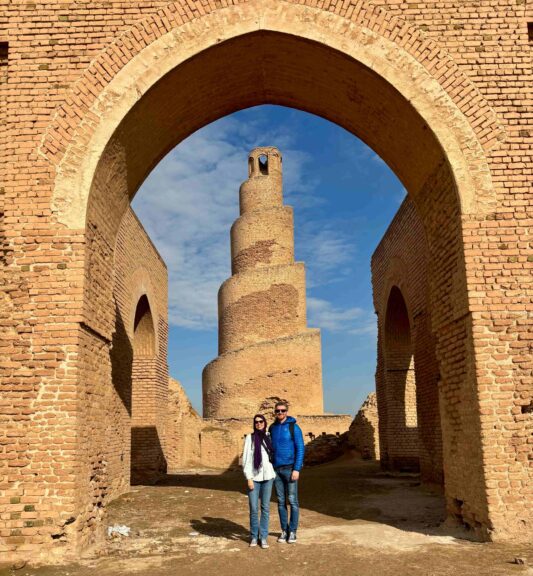
However, at Abu Dalaf mosque there’s a smaller spiral minaret which tada! you can climb – on a steep twisting ramp that dwindles down to a foot wide. The minaret stands amid the ruins of another 9th century Abbasid city called Jafariya, out in the desert just beyond the military defenses, security, and checkpoints of Samarra.
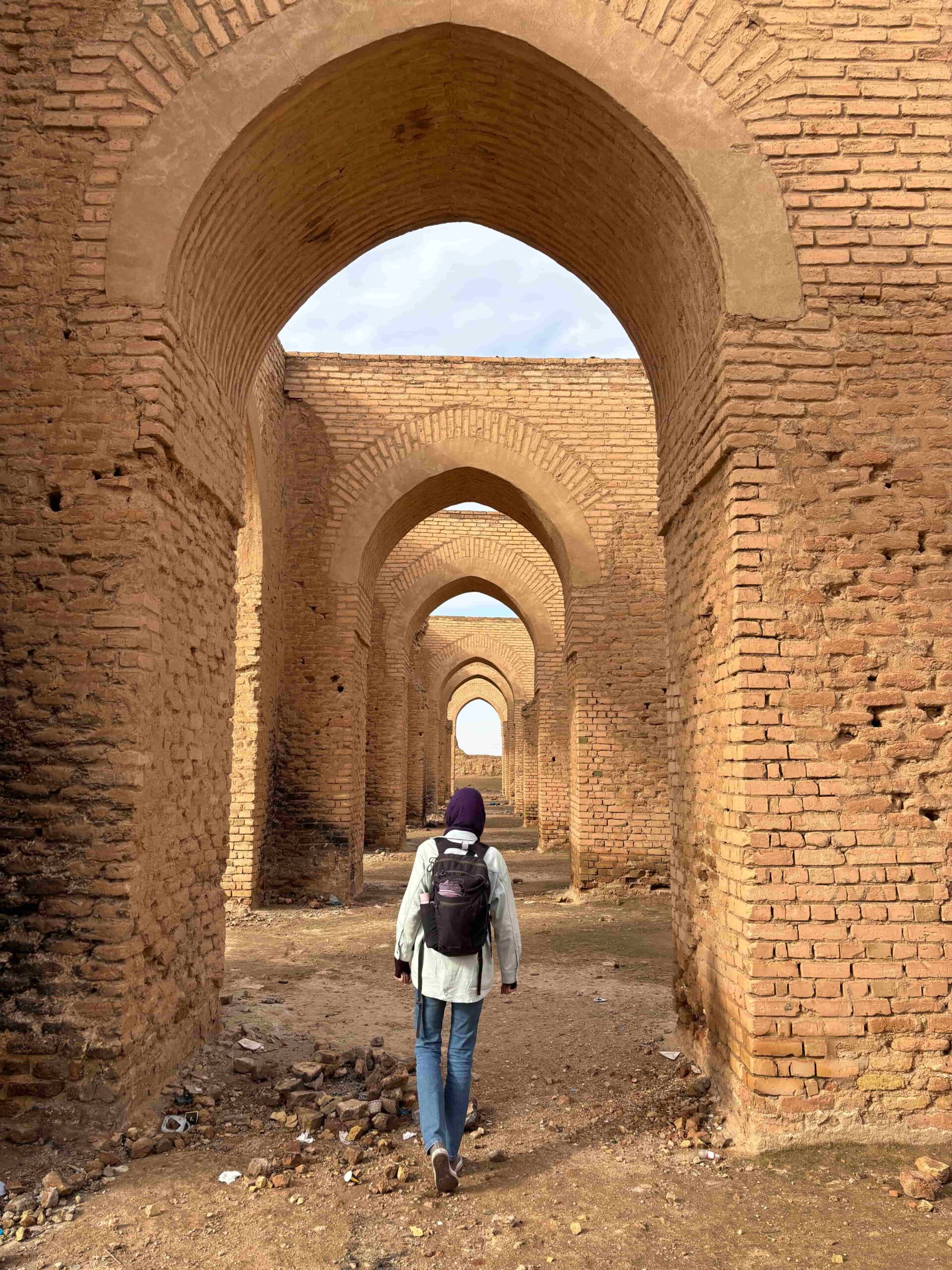
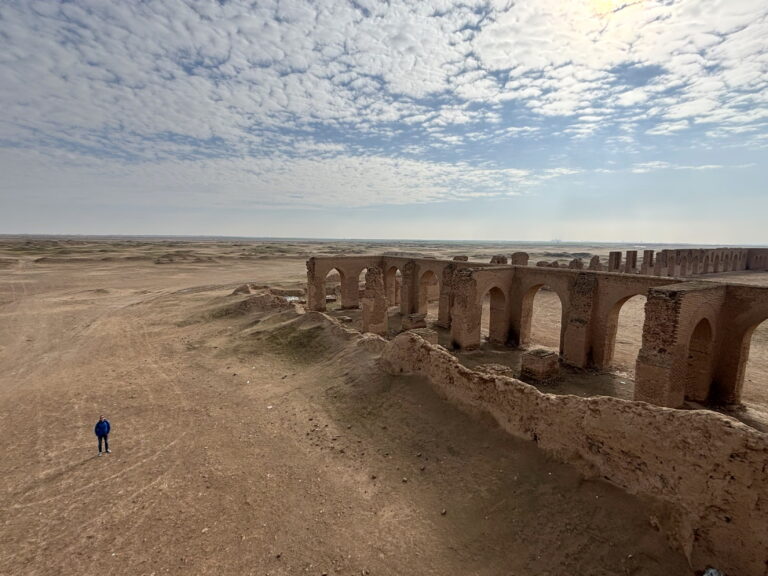
There are also some Abbasid palaces belonging to the Caliph and his son outside town but they leave a lot to the imagination, in addition to being closed at the time we were there.
How to get to Samarra from Baghdad
From Baghdad it takes about two hours to drive to Samarra. With another two hours for the return trip to Baghdad and at least two hours for Samarra itself, give yourself a full day with an early start. On public transport you’d need to give yourself more time for waiting around. And, keep in mind that if you take public transport to Samarra, security might not let you wander around freely once you get there.
There are a couple of ways to arrange a daytrip:
- You can take a share taxi from Alawi garage in Baghdad going to Tikrit or Mosul and have it drop you at the first checkpoint outside Samarra. From there, the police will probably make you arrange another taxi to cart you around Samarra itself. Also, the distance to Abu Dalaf is about 20km and I’m pretty sure they wouldn’t let you walk it (or try to hitch) anyway.
- You can hire a guide with a private car to take you there and back himself. We contacted some guides in the Facebook groups and got quoted 150-160 USD.
- You can go to Alawi garage and hope to hire a private taxi there that will do the same, and be ready to negotiate pretty hard on that.
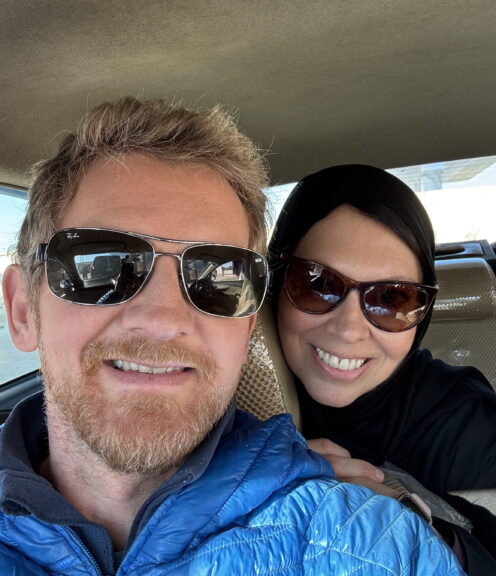
- You can pre-arrange yourself a private taxi to take you there and back again. This what we did and we had the hotel just set it up for us, for 100 USD. This was fine for us. You just need the car, and the driver to talk for you at the checkpoints. Plus, he will probably ‘supervise’ you a bit, similar to a guide, just cheaper.
We arranged our trip to include picking us up at the hotel, driving to (and waiting at) Samarra and a couple of other sites in the area, and dropping us off at Alawi Garage in Baghdad afterwards so we could get onward transport to Karbala. Since we weren’t going back to the hotel in Baghdad, we threw all our stuff in the trunk and took it with us, which also made this a good option for us. All in all, we were with Hossein the driver for eight hours.
No matter how you go you have checkpoints galore, first out of Baghdad and then into Samarra. Some of them took a while but overall they weren’t a big deal. Once you arrive, you’ll notice there is plenty of police and army presence, blast walls, razor wire, sandbags and all that, pointing to the town’s complicated history and relatively recent tensions.
There is a final passport and driver ID check before you can enter town. No one took our passports to keep while we were there (as I’ve read was the case before).
About visiting Al-Askari mosque
Women should bring an abaya and hijab or chador as you’ll need it for Al-Askari mosque. There are stalls selling abayas and chadors just outside the checkpoints for the mosque, and places you could change clothes but it’s better to just come properly dressed. There is a security/clothing checkpoint on the way into the haram area where on the women’s side they will also make sure you’re dressed properly, hair covered, and so on.
After the checkpoint we boarded a free bus loaded with some pretty serious chanting pilgrims, which runs you up to the shrine. I assume you can just walk, it’s no distance at all, we were just beckoned enthusiastically onto the bus and so we got on.
Where you get off there are some public bathrooms and another checkpoint to pass through and then you get to shoe and bag storage in the forecourt. Men and women can mingle there, before you reach the separate entrances to the actual mosque.
Cameras are not allowed in – phones are ok. If there’s a problem with photos anywhere it’s posted. It’s allowed taking photos in front of the mosque. Remember ladies, do not show a strand of hair or a member of the green feather duster army will tap you and admonish you to cover it up.
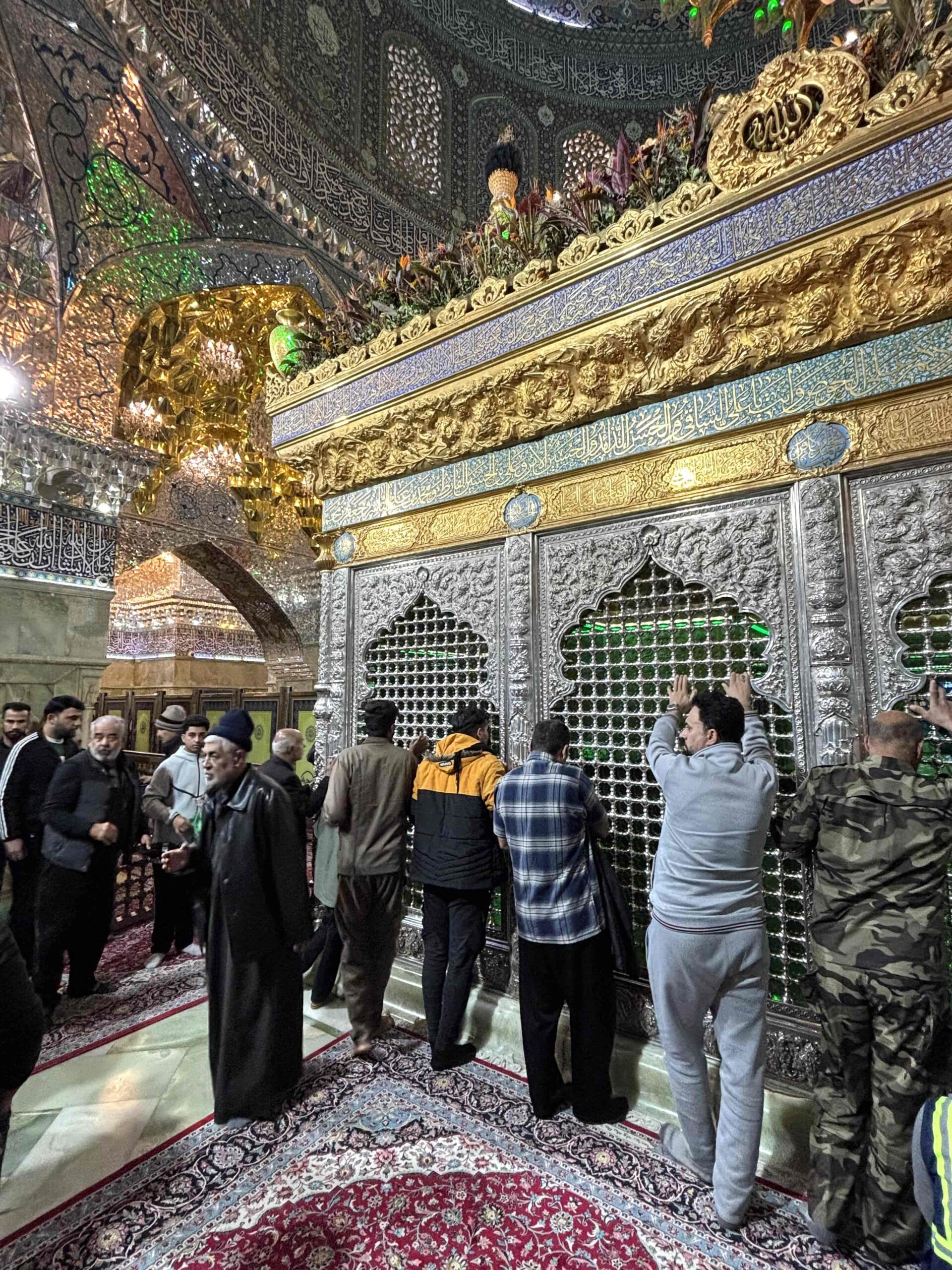
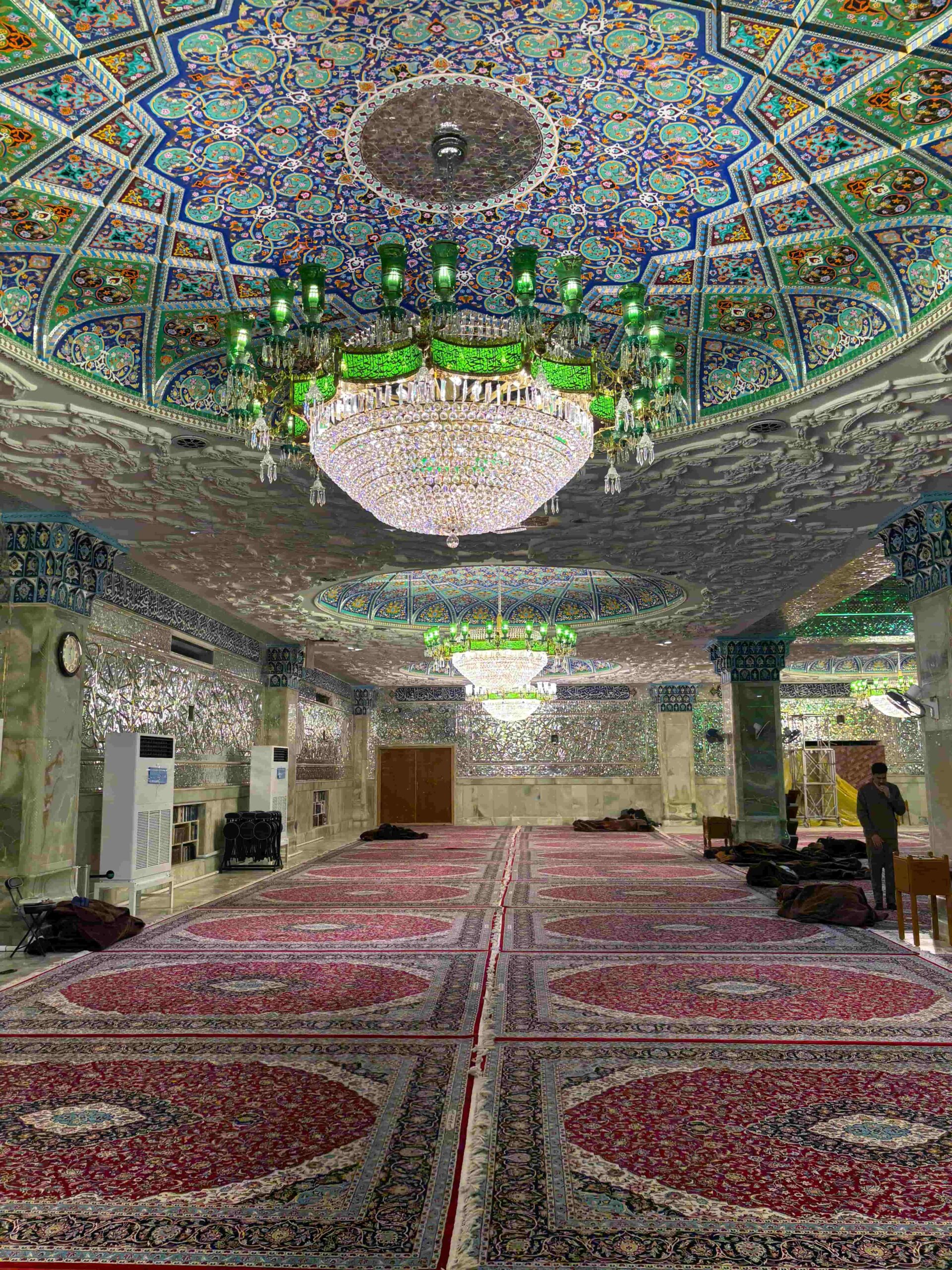
The mosque serves food and tea all day long. Just like anywhere else in Iraq there are plenty of friendly people, and we ended up having lunch (the two of us separated of course) with an Iraqi family.
See this post about Karbala and Najaf, for more information about the ins and outs of visiting these sacred religious sites.
Getting from Samarra to Karbala
From Samarra we drove back to Baghdad (about two hours) and Hossein dropped us as planned at Alawi Garage. There somebody offered us a private taxi for 30k dinar to Karbala, but we took a coaster that was ready to depart, instead.
Including traffic and getting off at a checkpoint to hang out with the police, the trip to Karbala took another two and a half hours. We arrived late in the evening but the city was jam-packed with pedestrians and finding a room was not an issue.
Read more about Karbala, and how to travel independently throughout Iraq, here.
Read more
If you’re planning a trip to Iraq, have a look at our Iraq travel guide and itinerary. And, find out more about our own independent travels in Iraq, here.
Check out the Destinations page for travel guides and stories about our off-beat adventures all over the Middle East and beyond.