Before setting off, we put some extra thought into our latest choice of destination. After all, the plan was to travel in Iraq, a country our government (and everyone else’s, actually) strongly warned against visiting. We’d read all the advisories suggesting you leave immediately if you already happened to be in Iraq, as though you’d somehow got there by mistake. But we’d also read a whole lot more about the positive side of traveling in Iraq. We knew that by going, we’d be joining a small but steady stream of curious visitors who look past the dire warnings and want to see what’s actually there.
What’s this positive side? So very positive that it made us disregard grim advice like ‘draft a will and leave DNA samples with relatives’, and just grab our backpacks and go? Well, for starters, Iraq has history. Look beyond the lingering bad news and you’ll find 7000 jawdropping years of it. We’re talking about Mesopotamia, the land between two rivers, the cradle of civilization. Then there are the Iraqi people themselves, and their culture of ingrained hospitality. The spectacular shrines and religious devotion that draw millions of pilgrims every year. The souks, the tea houses, the busy streets of Baghdad, the ruins of Mosul where resilient citizens rebuild every day but still have time to offer snacks and kindness to strangers.
And of course, from urban exploring in one of Saddam Hussein’s abandoned palaces, to drifting quietly in the reedy channels of the Mesopotamian marshes at sunset, there’s the magnetic draw of adventure. Real travel, raw and a little rough around the edges, the not-quite-perfectly-smooth experience you can only have in so many places anymore, in this age of mass tourism.
Still, anyone planning a trip to Iraq will have at least a few questions surrounding visas, money, and transportation – for starters. Not to mention the big ones: is it safe? Is it possible to travel independently? Really – what’s it like to travel in Iraq? And maybe even: should I tell my parents*?
We had an amazing time traveling on our own in Iraq. That’s why we’re sharing our positive experience here, along with our 14 day itinerary for independent travel in Iraq in the hopes that if you are going too, we can answer some of those questions and help you plan your trip.
*You might decide to lie to your parents about going to Iraq;) I’m not exactly young, and my mother is in her 70s, but parents will always be parents no matter how old their kid gets. That being said, my mom is pretty chill. When we called her from Mosul and admitted where we were, she said ‘Well, I’m used to this stuff from you guys’. And then she wanted to hear all about it.
What’s it like to travel in Iraq
Tour or DIY: is independent travel possible in Iraq?
Visa
What to wear
Cash or card? Exchanging money
Getting around by public transport
Where to stay
Things to bring
Weather
On the road – our itinerary
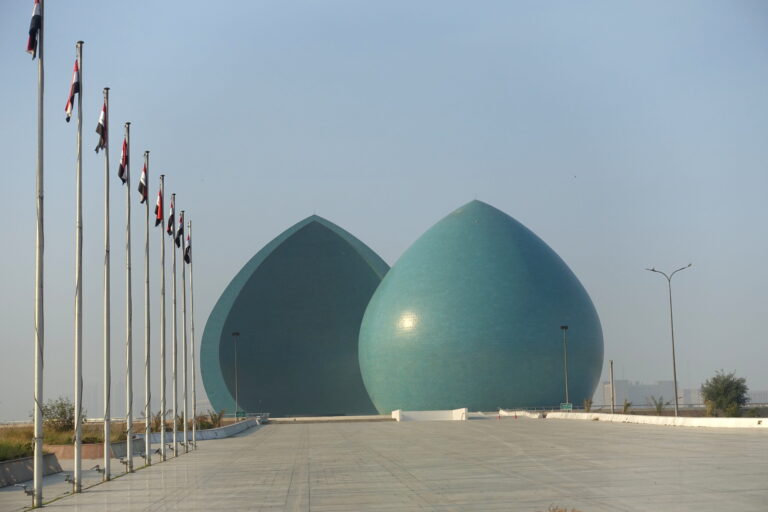
What’s it like to travel in Iraq?
There are a few things to consider if you’re thinking about traveling in Iraq. As you’ll see in this post, we thoroughly enjoyed pretty much every second we were there, but it’s not for everyone.
Safety
First of all, is Iraq safe? Well, that’s not up to me to say. After reading the travel warnings from most western governments you’ll barely want to leave your house, much less go to Iraq. All I can say from our own experience is that we felt safe there and didn’t encounter any issues. However, Iraq is not a stable country. It’s one of those places which is safe until it’s not. You should be aware that the situation can change quickly, even during the course of a short trip. And, there are regional differences: certain areas (for example, near the Syrian border) should be avoided. The bottom line is you have to put some thought into it and decide for yourself. In our case, we decided to ignore what our government(s) had to say, but that is definitely a personal decision and if you feel it’s negligent, you might want to think twice.
Like it or not, check what your government has to say on the subject (hint: probably nothing good) – because it will have a big impact on your insurance.
Do your research. See what locals have to say, as well as any travelers who are there at the moment. The Iraqi Travelers Cafe Facebook group is good for that, along with a few other similar groups like Iraq Travel Community and Iraq Travel Tips. Join at least one of these groups as they are full of locals who offer guiding services and general advice.
In terms of personal safety, Iraq is considered fairly safe. Like any other city, Baghdad will have its share of pickpockets, areas to avoid at night, and so on. Just use common sense.
Security
How do you feel about police and military presence, lots of security, and checkpoints? What about guns? Blast barriers? If you aren’t already used to all those things, you’ll need to get used to them quickly. As you travel around you’ll pass through a lot of checkpoints, both on the road and sometimes on foot. Mostly you’ll just have to show your passport – make sure you’re always carrying it when you travel from one place to another or daytrip. No police ever stopped us to ask for it when we were just walking around, but we always had them with us.
From the officer who pulled us aside in the street to ask if we have kids and offer us water on a hot day, to the kitted-out soldiers at the Samarra checkpoints, to the policeman who pried open the locked gate at Saddam Hussein’s palace so I could wiggle out (yes, more on that later) – everyone we dealt with was fine. If not overtly friendly (and some were) then they were at least patient and polite.
Insurance
All this talk of safety and security brings me to insurance. Most insurance companies won’t cover you in Iraq since traveling there is advised against. Both IATI and Safety Wing do cover Iraq, and we bought our policy from IATI.
It’s very important to note that although IATI and Safety Wing ‘cover’ Iraq, they don’t in fact cover everything. Your policy won’t apply if something happens to you as a result of armed conflict, terror, or anything else related to the government travel advisories. But unlike most other insurance that is completely voided just by entering Iraq, these ones should cover your run-of-the-mill accidents, injuries, or illnesses.
Tour or DIY: is independent travel possible in Iraq?
Your experience in Iraq will differ depending on who you are and how you travel: ie male or female, solo or part of a group, and so on. Women especially, should be aware of social norms and how to interact with men.
In short, it’s absolutely possible (and certainly allowed) to travel on your own around Iraq – without a guide, driver, or tour group. Guided tours are no longer required.
If it makes you more comfortable you can sign on to a group tour before you leave home, and everything will be arranged for you. If you prefer a more spontaneous approach, try asking in the Facebook groups. Those are full of people offering everything from walking tours and driving services, to daytrips and fully guided tours. These are at least local-run and you can contact prospective guides on WhatsApp and plan as you go.
Consider your past travel experience, particularly in off-beat destinations – so no, not South East Asia. If you’ve traveled independently in the Middle East before (Lebanon, Palestine, Jordan), other Muslim countries (Sudan, Pakistan), or even Central Asia (hello share taxis and marshrutkas), then you’ll have an idea of how things work in general and should be able to get around and do your own thing. We found it easy to travel in Iraq by ourselves.
And consider your comfort zone: if you’re used to meeting tons of travelers when you’re on the road, think again. You will meet very few. Tourist infrastructure is limited too. Are you fine with hotels that are quite simple, power outages, and a very casual approach to, erm, everything (like laundry…)? Forget about planning a rigid schedule and booking tickets in advance, or using Apps to run your life smoothly. You’ll wing it most days and find transport as you go, tolerate random delays, and don’t get me started on the reckless driving.
We don’t speak Arabic but that was ok. Learn a few words and phrases, bring Google Translate, and you’ll be fine.
Carry your passport with you everywhere you go. You need it to buy tickets and enter sites, and at checkpoints on the road.
Visas
There are separate visas for Federal Iraq and for the Kurdistan region. The Federal Iraq visa is good for both. The Kurdistan visa which you can get on arrival, is only good in Kurdistan.
For the Federal Iraq visa you have to apply online in advance. Print and bring the e-Visa with you and get the sticker in your passport when you arrive. You can enter Federal Iraq with your e-Visa by air or by land.
Officially, if you are going to go to both Federal Iraq and Kurdistan, you should go to Federal Iraq first. The visa sticker you get there will let you into Kurdistan as well. If you do the trip in reverse, you’ll have to buy the Kurdistan visa first, and then the one for Federal Iraq.
However: despite the whole ‘separate visas’ thing, some people have been reporting in the past year that they successfully entered Kurdistan by land with the Federal Iraq visa, carried on to Federal Iraq, and just got stamped twice. A friend of ours did this.
When applying for the Federal Iraq e-Visa you’ll immediately see two options. Choose ‘Evisa direct’ – not ‘Create profile’. When selecting the visa type:
- A Visit visa costs 115 USD, has a validity period of 60 days, and allows a stay of 30 days. That means from when you receive the approved e-Visa, you have 60 days to enter Iraq. Regardless of when you enter during that validity period, you will then get your 30 days stay.
- An Ordinary visa costs 160 USD and has the same conditions, but I think the allowed stay is longer.
Both include mandatory health insurance.
Supposedly it takes up to 48 hours to get the visa approval but ours took less than a day. It can absolutely take longer than 48 hours, so we applied two weeks ahead just in case.
Print out your e-Visa and bring it. If you’re flying to Baghdad you’ll need to show it to get on the plane.
What to wear
Men can dress how they want but should avoid shorts, tank tops, and so on.
For women, dress modestly and always have a scarf handy. Think loose pants and long tops, long skirts or dresses, long sleeves. If you’re going to go anywhere religious (um, and you will) you will have to wear an abaya and hijab or a chador. You can buy everything easily in Baghdad. You won’t have to cover your face. All women should dress conservatively all the time, solo women especially so.
In Baghdad I wore jeans with a long shirt, and kept a scarf looped around my neck. In Mosul I dressed the same way and often wore a headscarf, but that’s not at all mandatory. The same goes for the Nasiriyah and the Marshes, and Basra.
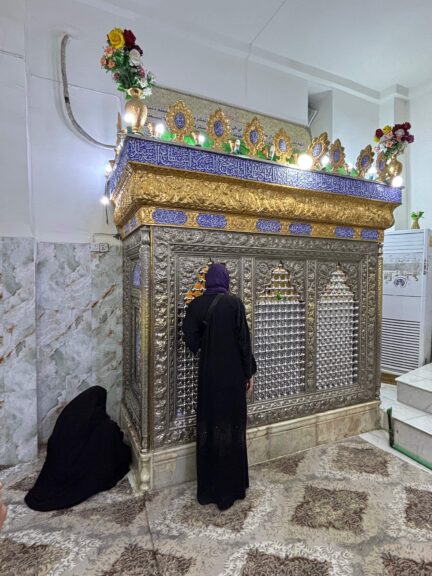
Samarra, Najaf, and Karbala are holy cities with many shrines and a certain type of atmosphere. An abaya and hijab or a chador is mandatory in the haram part of these cities – the areas surrounding the shrines – and certainly in and around the shrines themselves. Although you don’t have to wear it outside these areas you might as well because you’ll really stick out otherwise.
Cash or card? Exchanging money
Bring most of the money you need in USD or Euro, and a few different cards. Yes, you can pull cash out of machines. But they are not always available or reliable, and the bank rate is not as good as the rate you’ll get changing cash. Official money changers are everywhere. You can also spot places with a visa sign, and take cash out (at bank rates, with a surcharge) against your card on a terminal.
Getting around by public transport
It’s easy to get around on public transport as long as you can cope with some amount of delay.
Transport congregates in and departs from garages. There are different types of transport, typically:
- Share taxis, which come in Dodge or GMC. These are regular cars taking 4 to 7 passengers. They charge by the seat. You can usually take a Dodge privately by negotiating a price.
- Minibuses, coasters. Smaller buses running middle to longer distances.
If the garage is big you’ll have to find the vehicles going your way – this is easy, just announce your destination and people will point you to the next car. Don’t expect a schedule. Share taxis and local minibuses don’t leave until they’re full. Overall I preferred GMCs. Faster but feel safer, more comfortable.
A really great thing about public transport in Iraq: there’s not a lot of touting (in fact there’s almost none). Unlike in some places, you can actually reveal your intended destination to the drivers and others in the car park and they’ll just indicate where you should go – not try to force you into a ride of their choosing. And, they don’t tend to inflate the cost simply because you’re foreign.
Download the Careem and Baly taxi apps and use those to get around in cities.
Where to stay
Hotels are plentiful, cheap, and for the most part basic but absolutely fine. We paid between 30k dinar (24 USD) and 50k dinar (38 USD) for a room. The outlier was Najaf where we paid 90k (70 USD) for a really nice room. Most hotels quoted us in dinar, per person. Note that when somebody says ie 50 dinar to you, they mean 50 000.
None of the hotels we stayed at were listed on Booking.com or similar. Of the hotels we either stayed at or checked, all had vacancies except one. We found them on Google maps or with a quick search, and then we’d just show up and ask to see a room.
You can reach out to some hotels in advance on WhatsApp if you can find a number. Otherwise, you can book the more expensive options that are listed on Booking.com.
Even cheap hotels provide basic amenities and the ubiquitous bathroom shoes, but don’t count on toilet paper, or towels for that matter. Drinking water is easy to come by: we usually found cases of it in room fridges or piled in the hallways. There was always WiFi, but often slow (or off altogether with the power).
Couch surfing is also an option.
Things to bring
Trouble packing? Same. Here are some things we brought.
- the Bradt guide for Iraq. Although much of the safety information is out of date now there is loads of useful context and history.
- a marriage certificate if you’re traveling with your partner and planning to sleep in the same room. They usually don’t ask foreigners, but we were asked for it at least twice.
- download your maps and apps ahead of time. Particularly useful: Google Translate, Maps.me, Careem and Baly (taxis).
- get an eSIM or buy a physical SIM on arrival. We used Airalo and it worked well.
- since we don’t care for starting the day with 30 tiny cups of tea, we always bring an aeropress and coffee
- a water bottle with filtration like Larq or Crazy Cap is a good idea. Plastic is rampant in Iraq.
- a fully loaded powerbank for regular electricity outages
- a sleepsheet for some hotels
- toilet paper, hand sanitizer, wet wipes
- get your abaya in Baghdad before you head to Najaf or Karbala
Weather
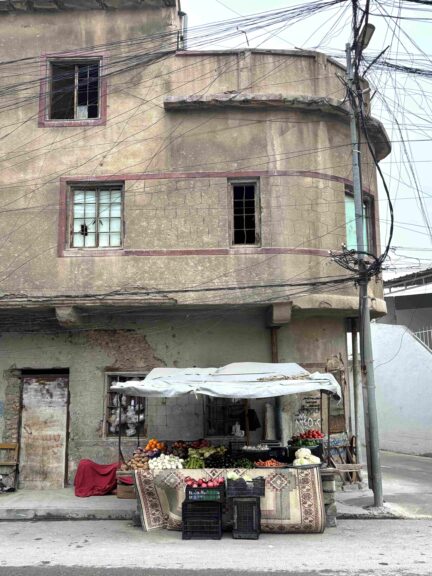
We were in Iraq in December. It was mild to chilly during the day, but keep in mind this is a destination where you tend to have a lot of clothes on anyway. In the evenings we needed a fleece or jacket. We got a very little rain. The mornings were incredibly foggy to the point of whiteouts.
Kurdistan is much colder at that time of year.
On the road – our itinerary
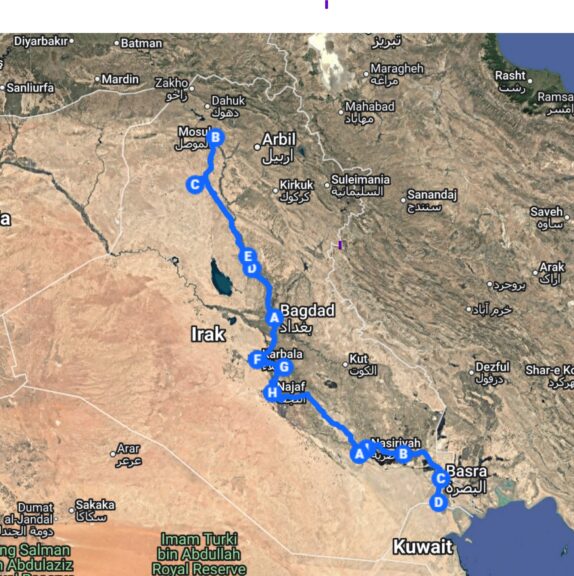
We spent about two weeks in Iraq. Starting in Baghdad we looped up north to Mosul and back, carried on south to the border, and then on to Kuwait.
This is our itinerary for 14 days in Iraq. Feel free to copy it and make your life easier: it worked very well for us. This post doesn’t go into a lot of detail about all the things you can see and do along the way, but will hopefully help you figure out where to go and how to get there.
As you’ll see, it’s a good idea to base yourself somewhere and make daytrips. It’s also possible to do some of the daytrips on your way from one base to the next.
Days 1, 2 – Baghdad
Days 3, 4, 5 – Mosul (daytrip Hatra)
Days 6, 7- back to Baghdad, and on to Karbala (daytrip Samarra)
Day 8 – Karbala (daytrip Babylon)
Days 9, 10 – Najaf (daytrip Kifl)
Day 11 – Nasiriyah, Ur, and the Mesopotamian marshes
Days 12, 13 – Basra
Day 14 – the Safwan border and on to Kuwait
Days 1, 2 – Baghdad
We had a day and a half in Baghdad, then came back again later. That was enough for us because a lot of the major tourist sites were/are closed. We used Careem occasionally but walked a lot just to be out in the streets. People are very friendly and welcoming and once we got over the feeling of ‘welp, Baghdad?’ we felt super comfortable. Baghdad is after all, the ‘City of Peace’ although for its every rise in fortune there’s been a spectacular fall, ever since the one-time capital of the Muslim world was first established in the 8th century.
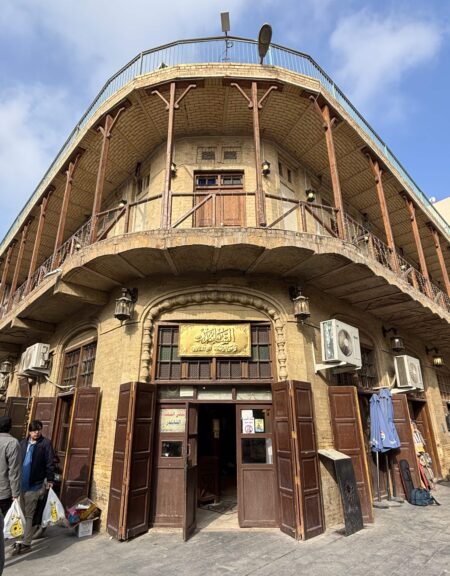
What with the Abbasid palace and school being closed, and the national museum, and the Martyrs monument…we just wandered around the old city, through some bazaars, along the Tigris, and enjoyed the city life like in any other. Zaza cafe in Al Mutannabi street serves good coffee, and of course for something more traditional we stopped by the famous Shabandar cafe.
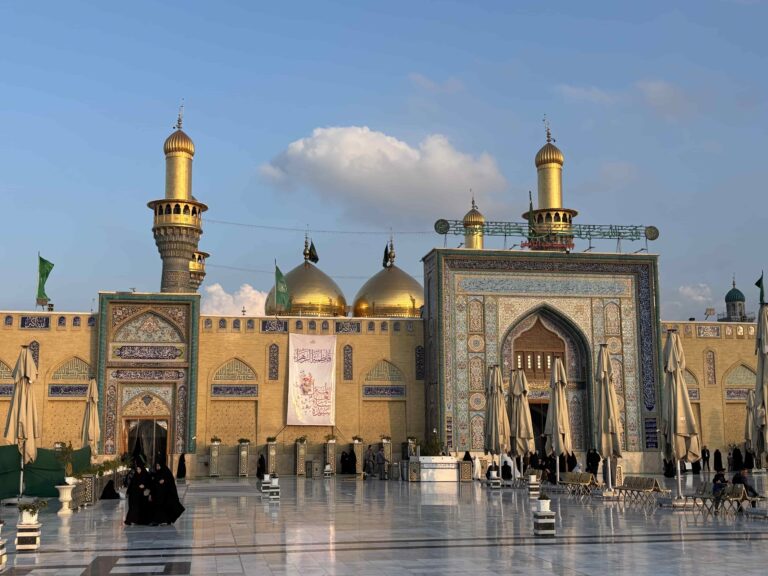
Women should have a headscarf handy as you’ll need it to walk in the streets around Kadhimiya Mosque. Plenty of market stalls sell chadors and abayas and if you don’t have one already, buy one to go inside the mosque itself. You can read more about the ins and outs of visiting holy sites in Iraq, here: Visiting Iraq’s Holy Shrine cities: Karbala and Najaf.
Arriving in Baghdad
We flew to Baghdad from Istanbul, showing printouts of our e-visas to board the plane. In Arrivals, we went directly to the very noticeable queue for e-visas, where they checked our passports and visa printouts and put the stickers in our passports. Done. From there we moved over to the Immigration counters, showed our brand new stickers, and that was it.
In the Arrivals hall there are a couple of ATMs and currency exchange offices. Official taxis are available inside the airport. They charge 50k dinar and you book at the counter. If you go outside a bunch of other drivers will approach and you can haggle. You can also book a Careem but first, you’ll need to get a ride outside of the airport security zone.
We went outside because we love to start a trip off with petty haggling as soon as possible. We got a ride straight to the hotel for 40k dinar (30 USD). Before we’d pulled out of the car park the driver informed us that his father was Saddam Hussein’s Minister of Defense, and off we went to Baghdad.
Where we stayed in Baghdad
We stayed at Qasr Al Barakat, just off Sadoun street. We contacted them ahead of time on WhatsApp but there was plenty of availability. A double room including a decent breakfast was 25k dinar per person. There are plenty of cheap street eats around.
The WiFi was good. There were constant power outages but the generator usually kicked in quickly. It was noisy at night between the generator, cats on the roof, big families staying, and all that. It was absolutely clean enough and had basic amenities.
Days 3, 4, 5 – Mosul (daytrip Hatra)
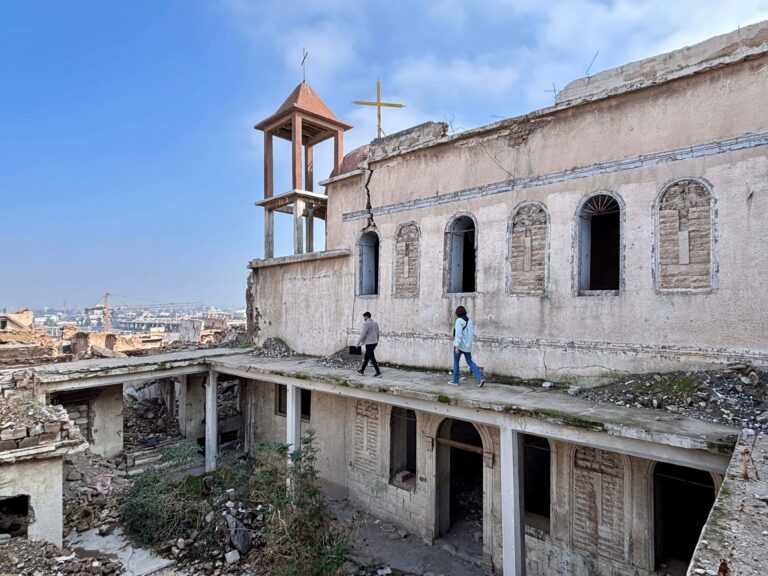
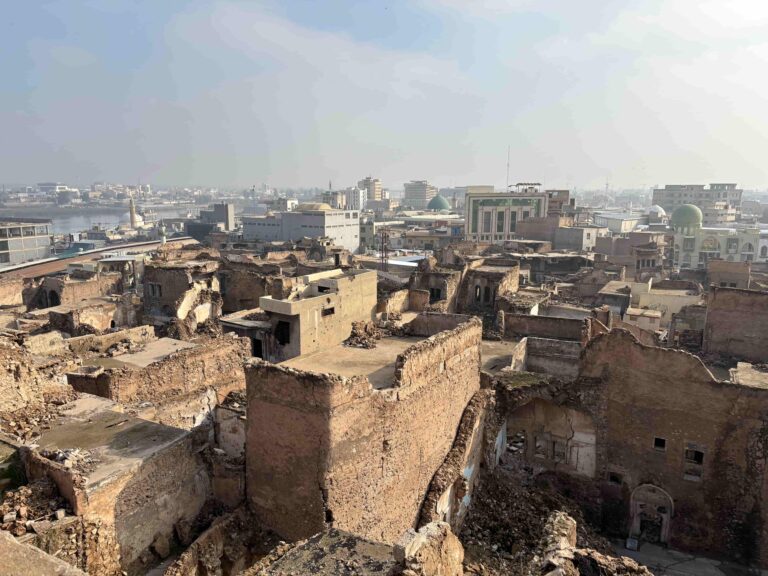
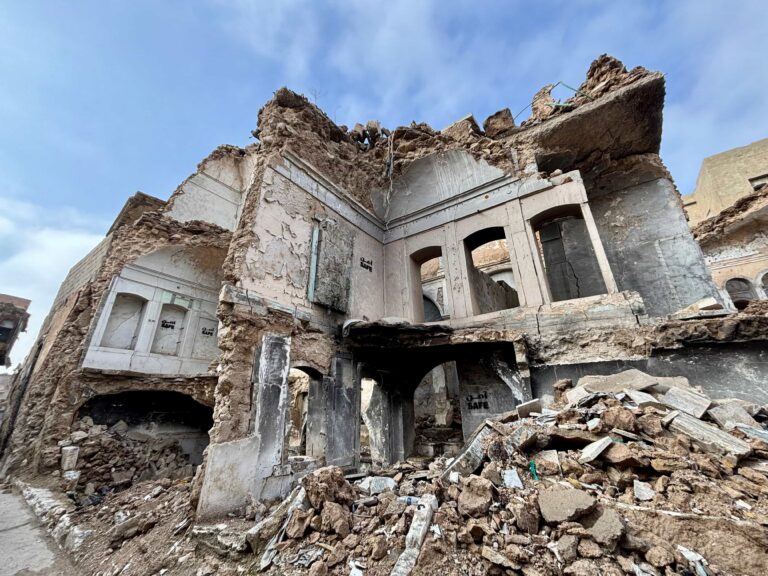
Mosul: known to Christians and Muslims alike as the ‘City of Prophets’. Standing opposite the site of ancient Ninevah on the banks of the Tigris, it’s Iraq’s second city. When ISIS captured Mosul in 2014, around 70% of the old city was destroyed in the fighting. Today, Mosul’s incredibly resilient citizens are still rebuilding and reclaiming their home.
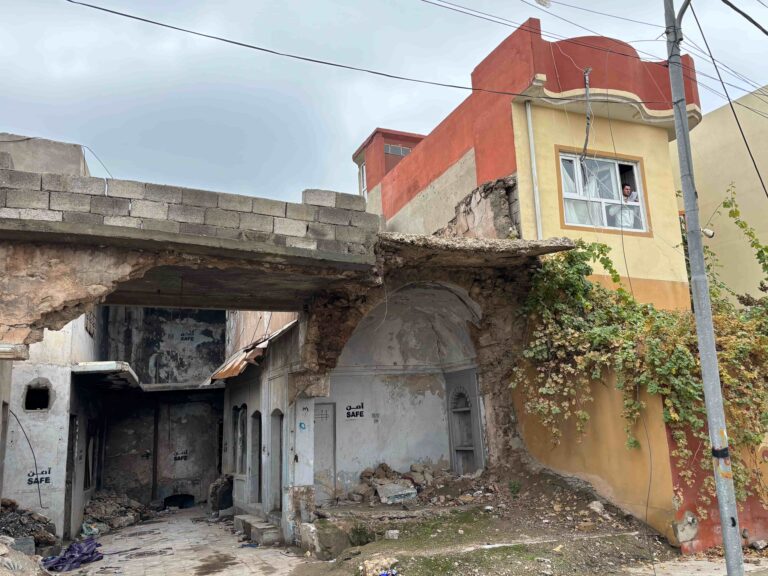
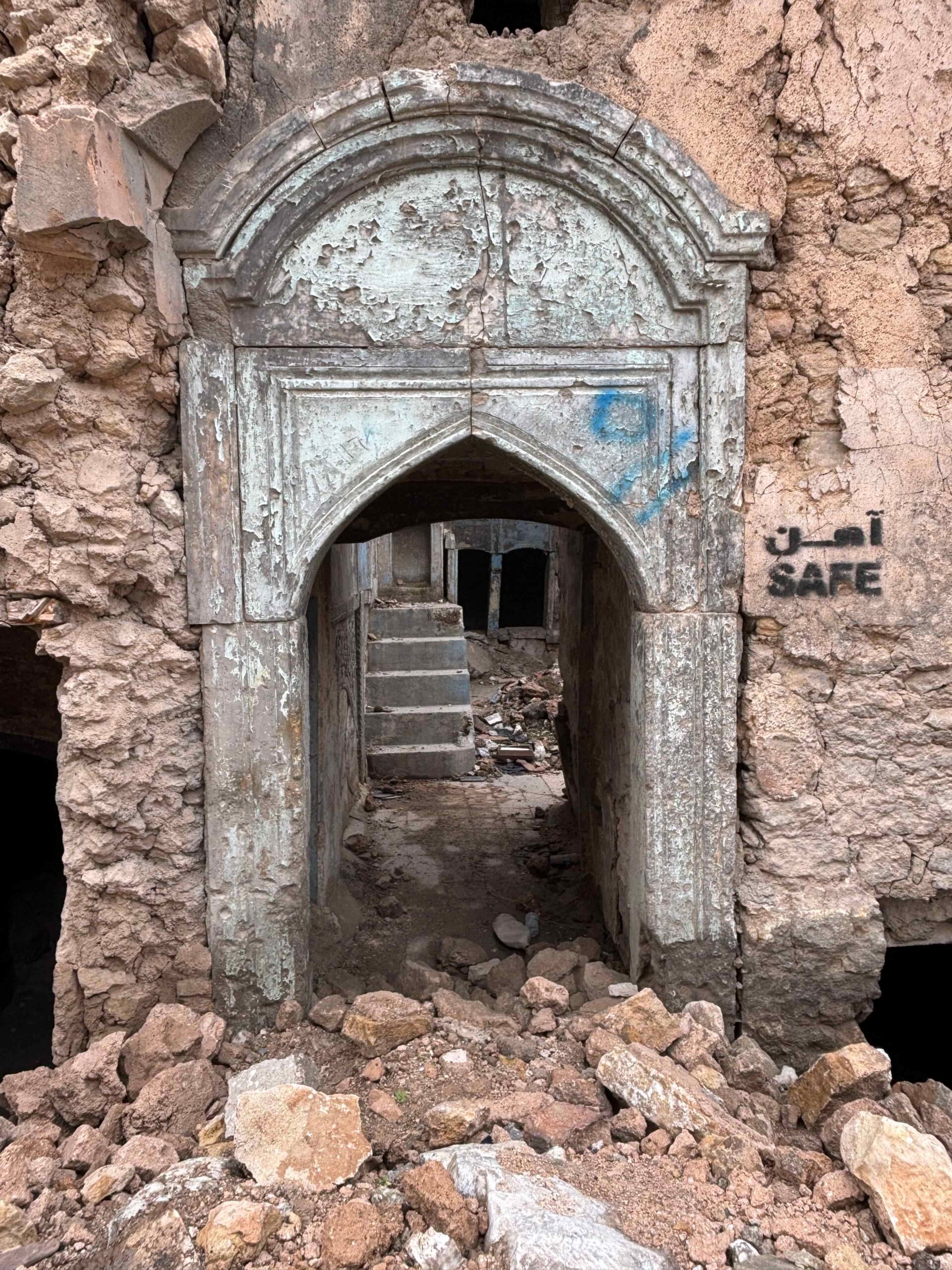
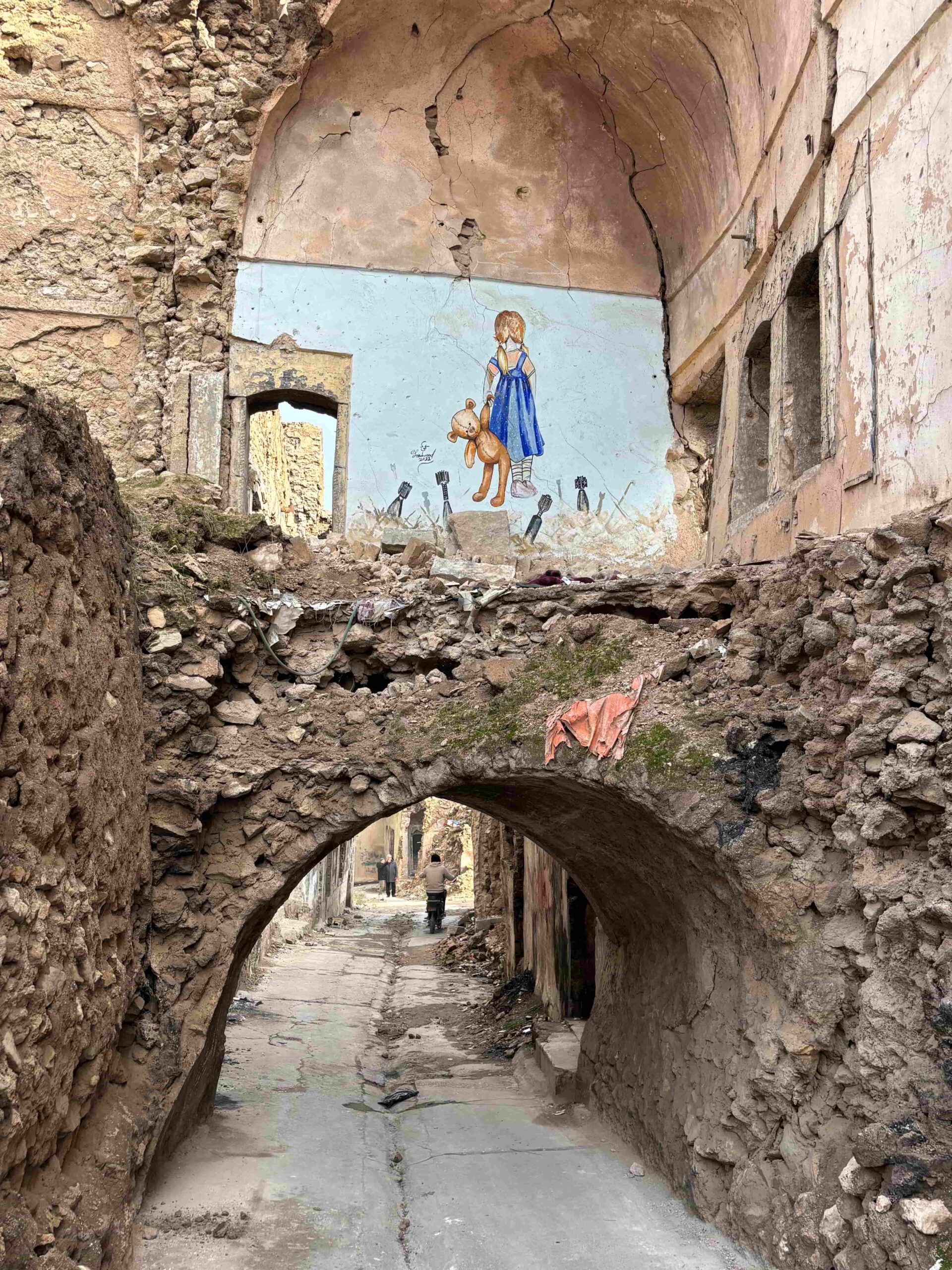
Mosul was an absolute highlight, I wouldn’t miss it.
It can be hard to get money in Mosul – ATMs are not plentiful or reliable. Better have USD or Euro with you and change it as you go. There’s no Careem in Mosul. Back to the good old days, bargaining rides in the street.
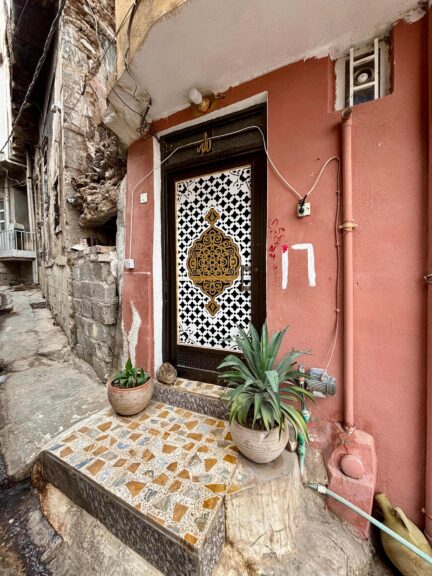
The very best thing to do in Mosul is just to be there. The people are amazing. Go for a walk, eat some food, drink some chai – you’ll see what I mean. Don’t even bother trying not to – everywhere we went people welcomed us, fed us, poured chai down our throats. It’s one of the friendliest places I’ve ever been.
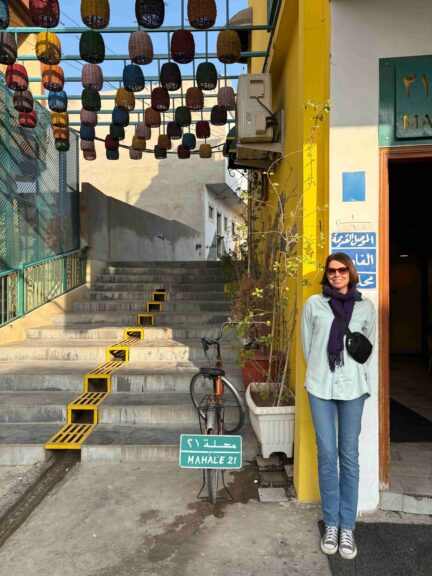
The first day we hired a guide to show us around: someone who lives there, and was there during the worst of the conflict. That was eye-opening to say the least. You can easily find a guide in the Facebook groups I’ve mentioned. Our Mosul walking tour was a full day and covered the Old City, many mosques, churches, souks, a couple of museums, the city gardens, and lunch in Mahale 21 cafe.
NOTE: We’ve been to Kurdistan on a previous trip. But if you’re going there on the same trip, it would make sense to flip this around: follow the itinerary south from Baghdad first, then up to Mosul and on to Kurdistan after that.
Getting to Mosul from Baghdad
Transport runs to Mosul from Alawi Garage in Baghdad. It’s big but very easy to find your ride – everyone shouts out destinations and will point you the right way. Destinations are signed in Arabic so if you can read it, follow the signs.
We got the last two seats in a GMC and waited a couple of minutes to set off. That cost 20k dinar per person and dropped us off at a roundabout on the outskirts of Mosul where a ton of taxis were waiting to go the rest of the way into the city. The GMC driver said he’d take us right to the hotel for the inflated price of 10k dinar. Iraqi people are wildly hospitable but taxi drivers are the same everywhere.
There were six checkpoints on the way from Baghdad. We drove straight through three, stopped briefly at two where officers checked our passports, and at one we had to get out of the car and trudge off for a short chat in the boss’s office in a portable.
It’s about five and a half hours from Alawi Garage to the centre of Mosul, including a lunch stop where the driver was the only person in the car not punctually back and ready to go after thirty minutes.
Where we stayed in Mosul
We stayed at Hotel Kharamana in a double room for 15K dinar per person. The rooms and lobby are clean and comfortable. They don’t provide towels. The WiFi only works in the lobby or downstairs and not in the rooms. There’s a power outage (at least) once a day in the early evening when they change over from city power to the generators. The hotel staff are really friendly and we liked it a lot.
During our wanders around Mosul we found a brand new (literally, opened two days previously) boutique hotel called Manara Hotel over near the Great Mosque of Al-Nuri. It’s lovely and costs about 50 USD a night including breakfast.
Daytrip to Hatra from Mosul
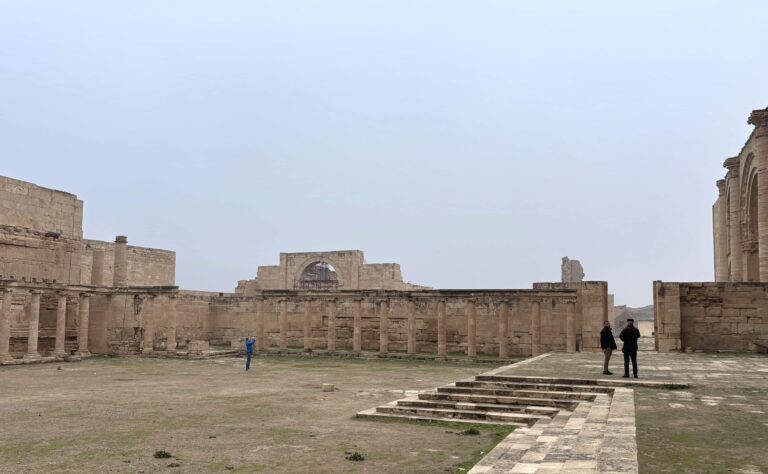
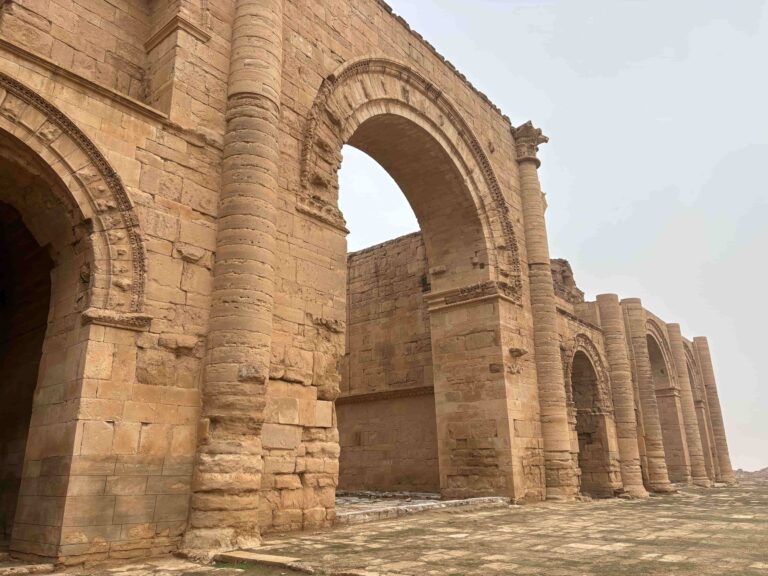
The ruins of the ancient city Hatra make a good daytrip from Mosul. Once the fortified capital of the first Arab-ruled kingdom wedged between the Parthian and Roman Empires, Hatra was destroyed by a Sassanid king and deserted by the middle of the 3rd century AD. You’re probably more familiar with other Arab-controlled cities in the same kingdom: Palmyra, Baalbek, and Petra.
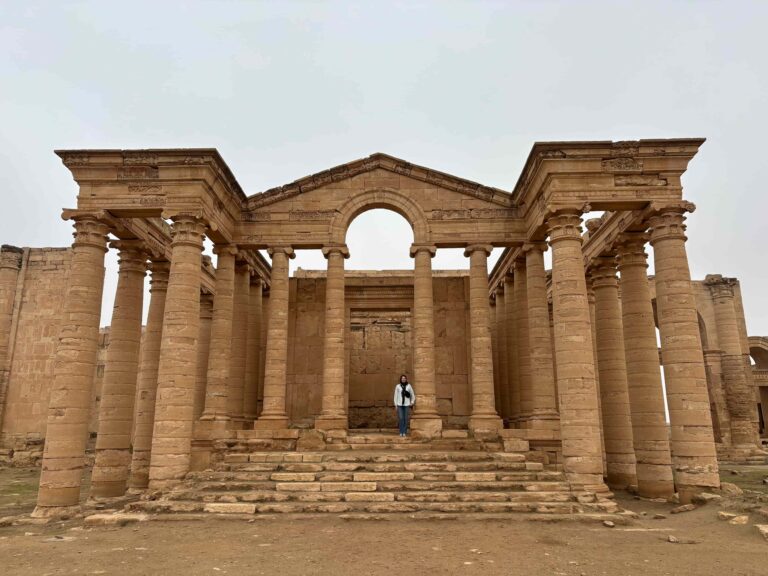
The well-preserved ruins were discovered in the 1800s, although not a lot of excavation was carried out until the 1900s. In the 1980s Saddam Hussein ordered some restoration work and as a result you can see bricks stamped with his name. More recently, Hatra was attacked again by ISIS who tried to bulldoze large parts of the site in 2015. They succeeded in destroying some statuary and riddling the walls with bullet holes, but otherwise most of the ruined ancient city is still intact.
Hatra is not reachable by public transport. You need a ride.
We arranged a taxi at our hotel’s reception. It cost 80k dinar/50 USD and included the driver picking us up at the hotel, driving us to the ticket office, on to Hatra, waiting there, and bringing us back. We spent about an hour at the site itself. Driving there and back took about one and a half hours each way, including the checkpoints that became quite frequent the closer we got (to Hatra, and so to the Syrian border).
Tickets are not sold at the site. Make sure your driver knows to take you first to the police station/office of antiquities, just outside town in Ninevah governate. It goes without saying, as you need it for checkpoints, but bring your passport. The ticket office only took credit card which was the exact opposite of what we expected.
Tickets – to all major historical sites – are 25k dinar each.
Days 6 and 7 – back to Baghdad, and on to Karbala (daytrip Samarra)
After Mosul we went back to Baghdad and stayed there one night. The next day we went to Samarra and then carried on to Karbala.
Getting to Baghdad from Mosul
We went to Baghdad Bus Station in Mosul which is very close to Hotel Kharamana. There were plenty of share taxis standing there ready to fight over us and we opted for a GMC. After waiting for some time the driver moved the car to the garage on the outskirts of town (at a roundabout in the direction of Baghdad) and we waited some more.
Eventually the driver rounded up a few more passengers and we left. It cost 20k dinar per person to Alawi Garage in Baghdad, and took five and a half hours including lunch.
We spent the night in Baghdad at the Qasr Al Barakat.
Daytrip to Samarra from Baghdad
Around 836 AD Samarra was designated the capital of Abbasid Empire by the Caliph Al Mutasim, who then devoted himself to building a glorious city as a reflection of his own greatness. After a brief moment in the sun – fifty years, to be exact – the city was suddenly deserted and the capital re-established in Baghdad.
To Shia Muslims, Samarra is a holy city – the Al-Askari mosque there contains the tombs of the 10th and 11th imams. However the town’s population is largely Sunni and security – which there is a lot of – is shared between an Iranian militia and the Iraqi army.
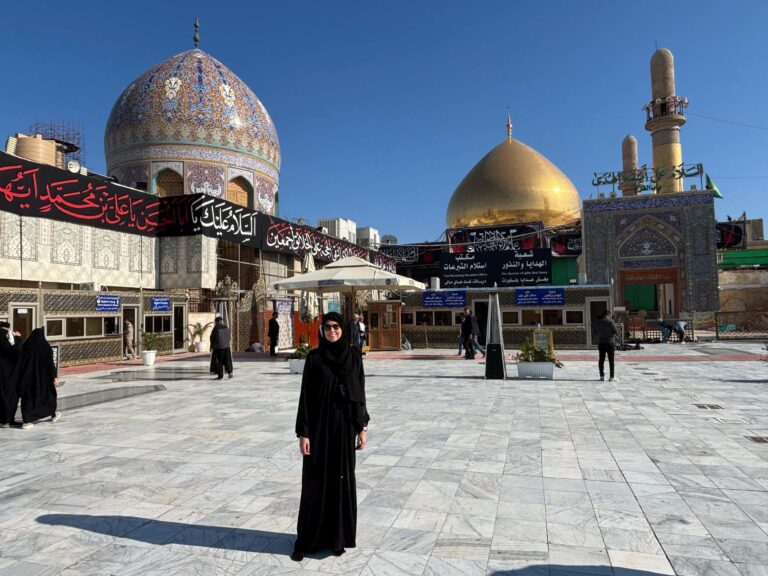
Down the road from Al-Aksari is the Great Mosque of Samarra, also known as Malwiyya mosque for the spiral minaret that stands beside it. You can at times climb the spiral minaret – but not at the time we were there. There are ruins of Abbasid palaces belonging to the Caliph and his son outside town but they leave a lot to the imagination. But at Abu Dalaf mosque there’s a smaller spiral minaret which tada! you can climb.
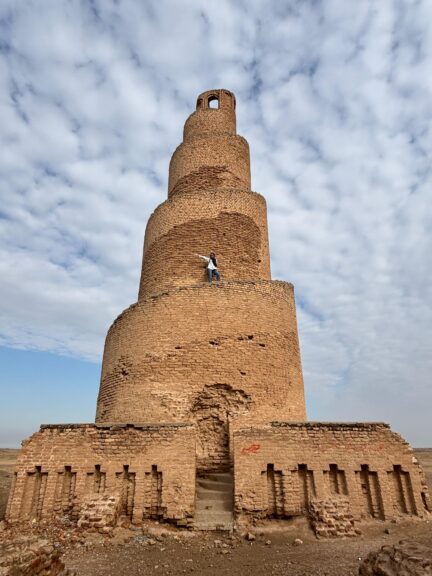
There are no hotels in Samarra (that allow foreigners anyway) but you can sleep overnight in the mosque. However the atmosphere in Samarra is infamously kind of strained and you’re probably better off just daytripping from Baghdad. Give yourself a full day with an early start.
There are a couple of ways to do this daytrip. Read about it here: Daytripping to Samarra from Baghdad.
And, you can read more about the ins and outs of visiting holy sites in Iraq, here: Visiting Iraq’s Holy Shrine cities: Karbala and Najaf.
Getting to Karbala from Baghdad
Our daytrip to Samarra included a ride back to Alawi Garage in Baghdad. There somebody offered us a private taxi for 40k dinar to Karbala, but we took a coaster for 3.5k dinar each. Including traffic and getting off at a checkpoint to hang out with the police…the trip took about two and a half hours. We arrived late in the evening but the city was jam-packed with pedestrians and finding a room was not an issue.
Day 8 – Karbala (daytrip Babylon)
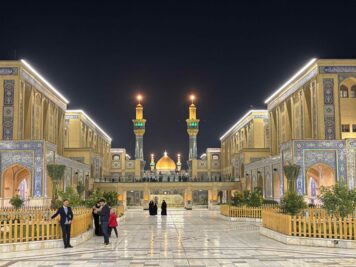
Karbala: one of Iraq’s – if not Shia Islam’s – holiest cities. Home to two imposing shrines, there is serious pilgrim traffic here and a completely different atmosphere to Baghdad or Mosul. In the heart of the old city are the shrines of Hussain (a son of Iman Ali) and his half-brother Abbas, and they are the focus of Karbala and everyone in it. Hussain and Abbas were martyred at Karbala in 680 AD, in a battle over succession to the caliphate.
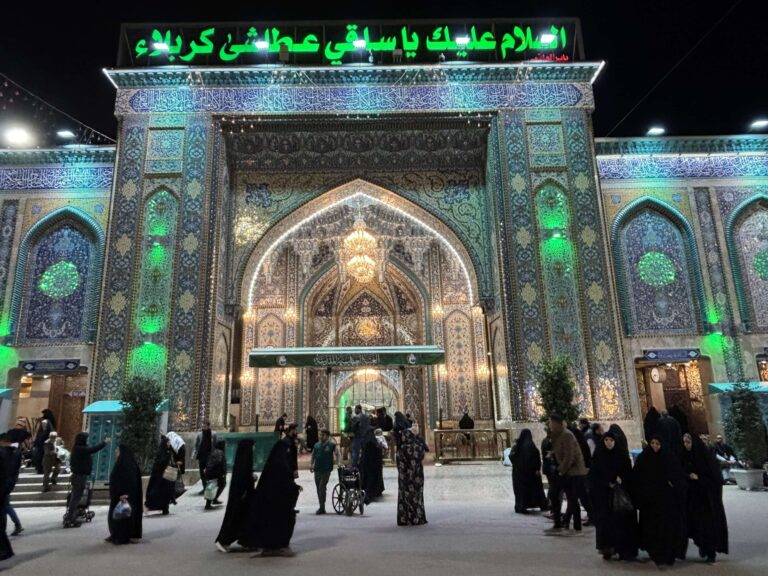
We stayed a couple of nights each in both Karbala and Najaf. If you’re short on time you could base yourself in one of them and daytrip to the other.
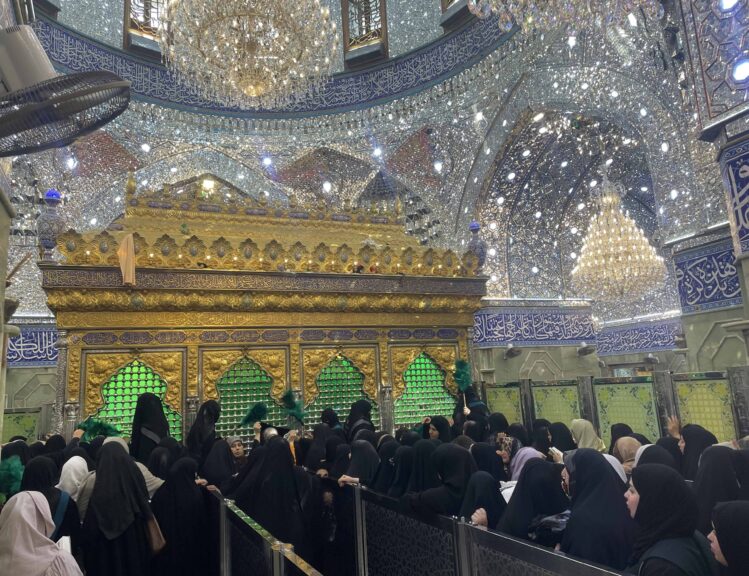
Due to the possibility of sectarian violence, there is a lot of police presence in Karbala and a lot of security. You’ll get used to it quickly and won’t notice. Just follow the rules about clothing and be respectful at the checks.
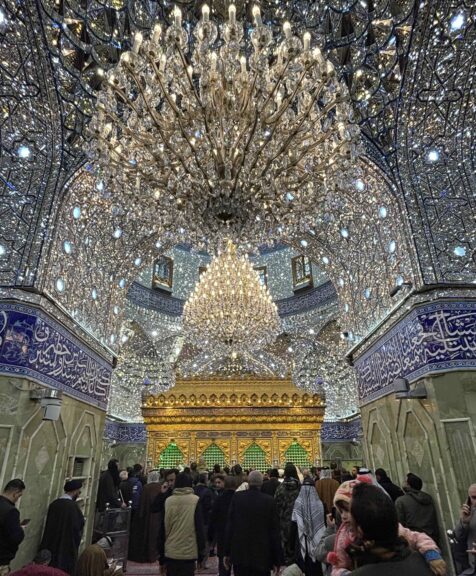
Read more about how to visit Karbala and its holy shrines, in this post: Visiting Iraq’s Holy Shrine cities: Karbala and Najaf.
What to wear in Karbala
As soon as you arrive at the edge of the old city near the haram area – the holy area surrounding the shrines – women need to have an abaya and hijab or a chador on. You can buy these on the way in from the new town and all over the bazaars in the old city area. I bought mine in Baghdad and had it on when we arrived. That felt more comfortable and easier since we arrived at night and I didn’t feel like clothes shopping. Outside the old city you can go without – but wear a headscarf at the very least. It’s easy to tell where the perimeter is: concrete barriers, police, gates, fences, and security surround the old city.
Where we stayed in Karbala
We stayed at the Mayali hotel. Like many others, this hotel is inside the old city so we had to go through all the security checks to reach it. It cost 57k dinar for two people. It was perfectly clean and comfortable.
Daytrip Karbala to Babylon
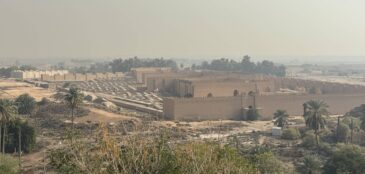
We couldn’t spend all our time ogling the ceilings in the shrines, so we daytripped to Babylon. Reaching Babylon by public transport is simple and you can do it yourself. If you want to visit Saddam Hussein’s palace at Babylon while you’re at it you need extra time and a local friend or a guide, because that site is closed to the public. Make sure you save your tickets to Babylon since access (if you can get it) to the palace is from inside the Babylon site’s checkpoints.
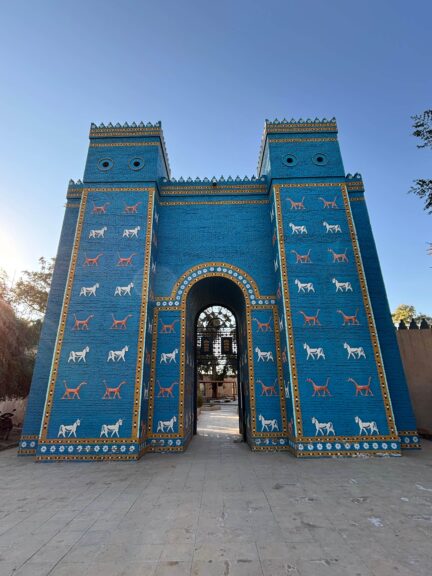
NOTE: you can also make this daytrip from Najaf.
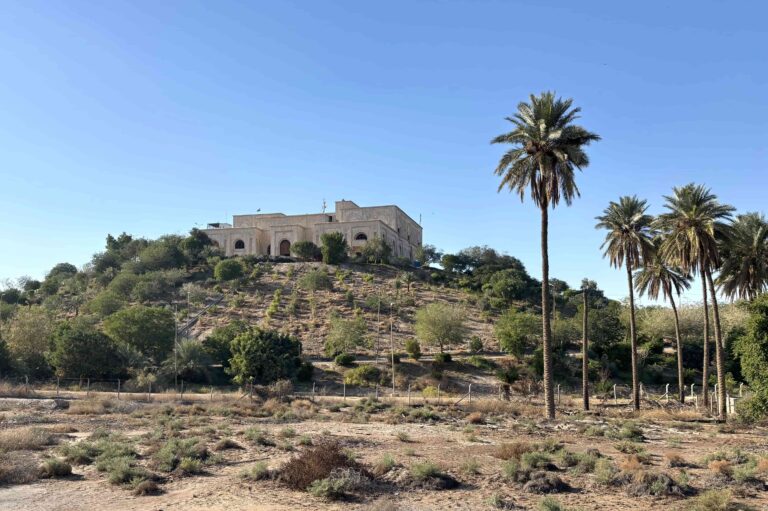
For more about how to daytrip to Babylon yourself and (possibly) explore Saddam Hussein’s palace, see this post: Daytripping to Babylon from Karbala.
Days 9, 10 – Najaf (daytrip Kifl)
Like Karbala, Najaf is one of Iraq’s holy shrine cities. Here the shrine complex is even more impressive if that’s possible. Also like Karbala, you’ll find throngs of pilgrims day and night.
In the heart of the old city is the main attraction: the Holy Shrine of Imam Ali, 4th Caliph and son-in-law of the Prophet Mohammed.
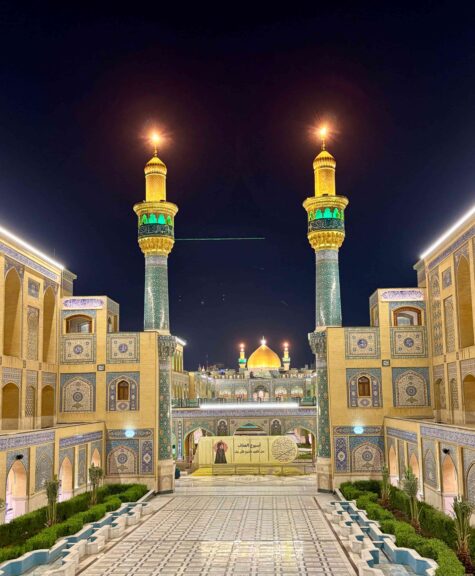
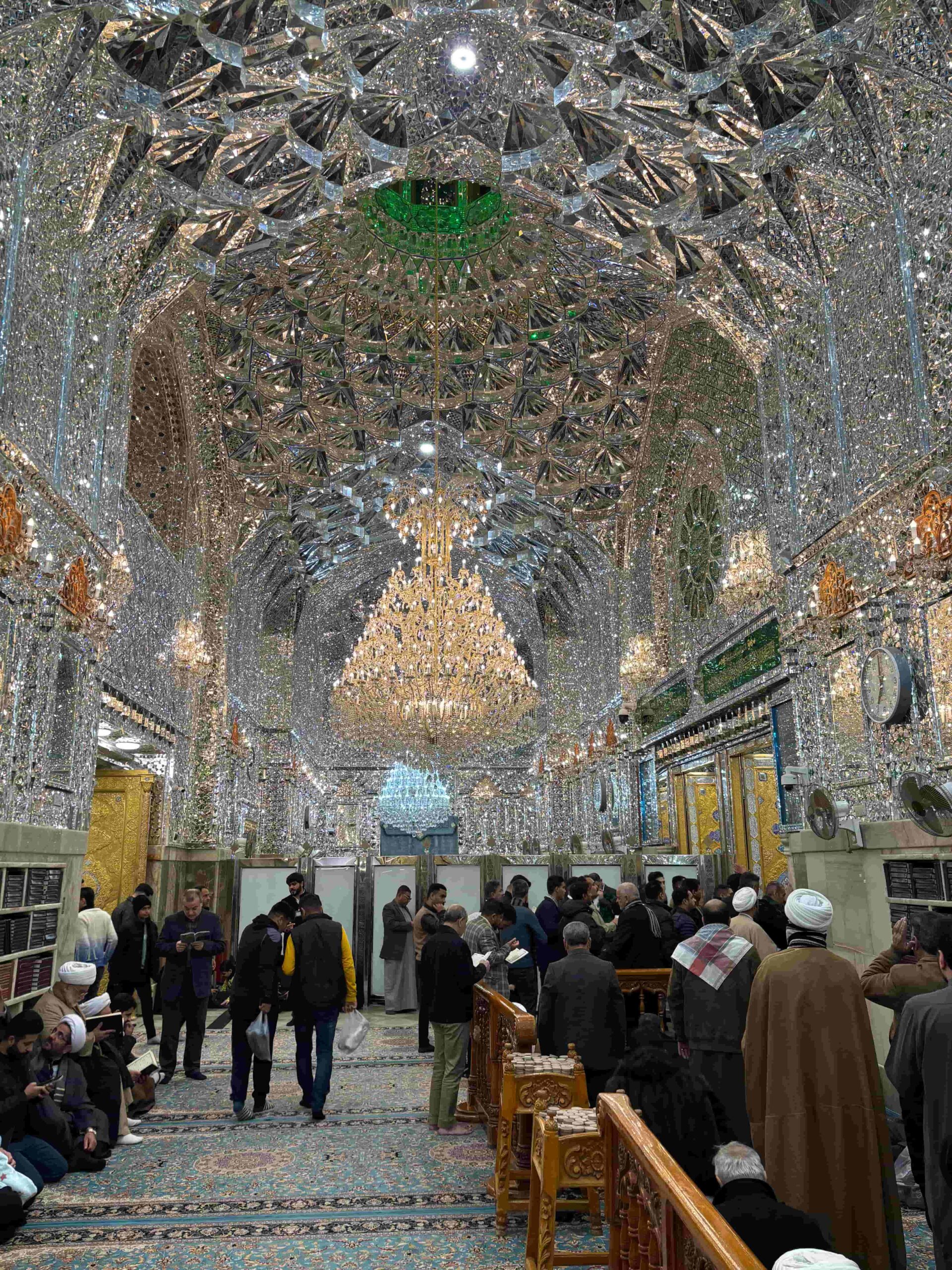
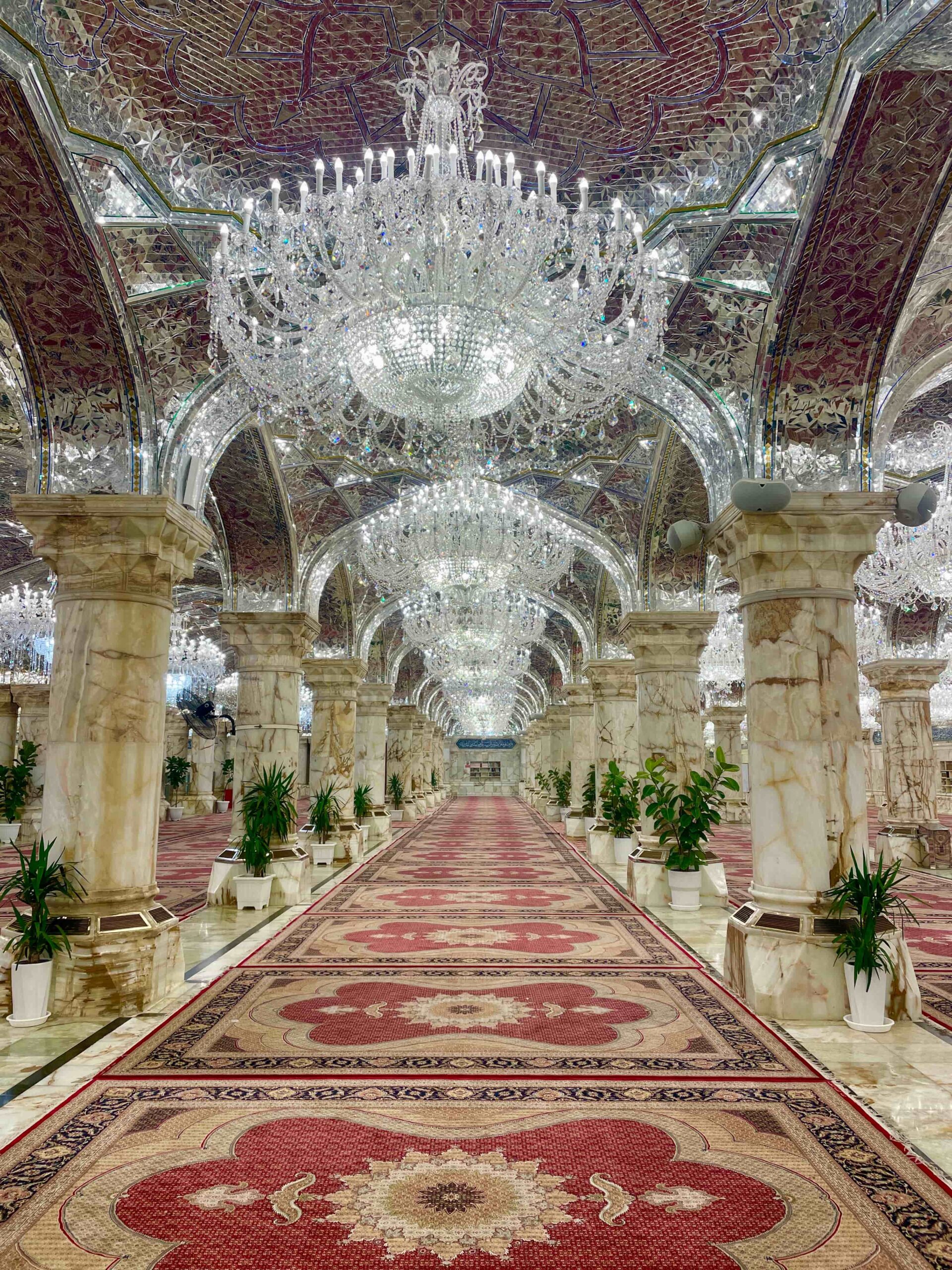
Due to the possibility of sectarian violence, there is a lot of police presence in Najaf and a lot of security. You’ll get used to it quickly and won’t notice. Just follow the rules about clothing and be respectful at the checks.
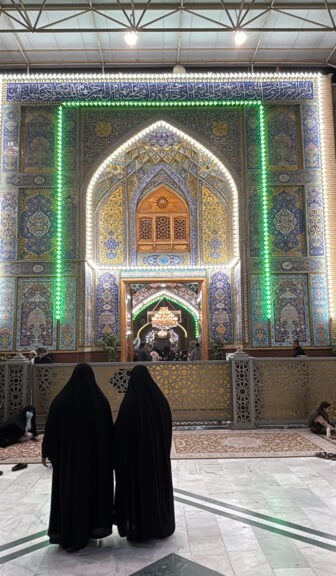
Aside from the shrine, we spent some time getting lost in the souks, and in the old city itself. There’s a mosque on every corner.
We also got a look at Wadi Al-Salam, or ‘Valley of Peace’. The biggest cemetery in the world, it’s practically a suburb of Najaf, with millions of graves so far. You can wander into certain limited parts of the cemetery but a lot is off-limits and keep in mind: it’s a cemetery that’s still very much in use. The best way to get a good look is to go to the parking garage nearby and walk up to the top.
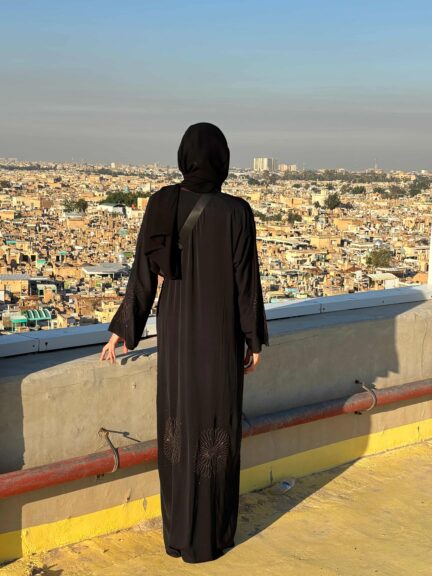
Read more about how to visit Najaf and its holy shrine, in this post: Visiting Iraq’s Holy Shrine cities: Karbala and Najaf.
Getting to Najaf from Karbala
We took a coaster from the Garage Unified in Karbala to Najaf for 2.5k dinar each. That took just a little over an hour with a short delay at a checkpoint.
In Najaf the coaster dropped us at the Najaf bus station a short distance from the old city. Buses run the rest of the way into town for 1k dinar.
What to wear in Najaf
As soon as you arrive at the edge of the old city near the haram area – the holy area surrounding the shrines – women need to have an abaya and hijab or a chador on. You can buy these on the way in from the new town and all over the bazaars in the old city area. I bought mine in Baghdad and had it on when we arrived. Outside the old city you can go without – but wear a headscarf at the very least. It’s easy to tell where the perimeter is: concrete barriers, police, gates, fences, and security surround the old city.
Where we stayed in Najaf
There are quite a few hotels in the same area just outside the haram area, and all fairly expensive. The first night we stayed at Nobles Palace Hotel for 70 USD and it was really nice. It included a good breakfast and was super clean. The next day we nevertheless moved directly across the street to Anis Al-Nufous Hotel for 20k dinar per person – very basic but clean. And noisy (so very many kids in the next room).
Daytrip from Najaf – Saddam Hussein’s palace, Kifl, and around
A local friend took us to some places out of Najaf, just to show us around the area. We went to the shrine of Dhul-Kifl/Ezekiel’s tomb, the spiky ruins at Borsippa thought to be the site of the Tower of Babel, and the Mosque of Prophet Abraham.
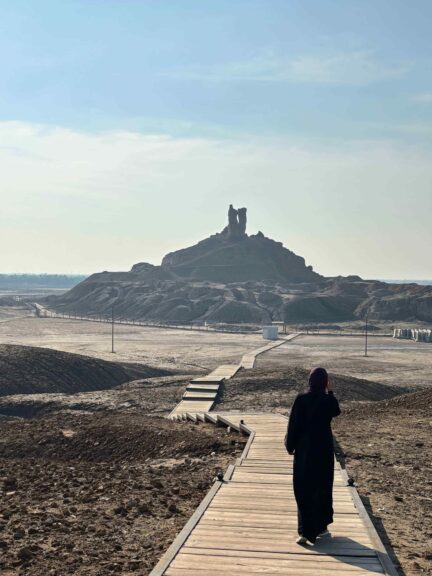
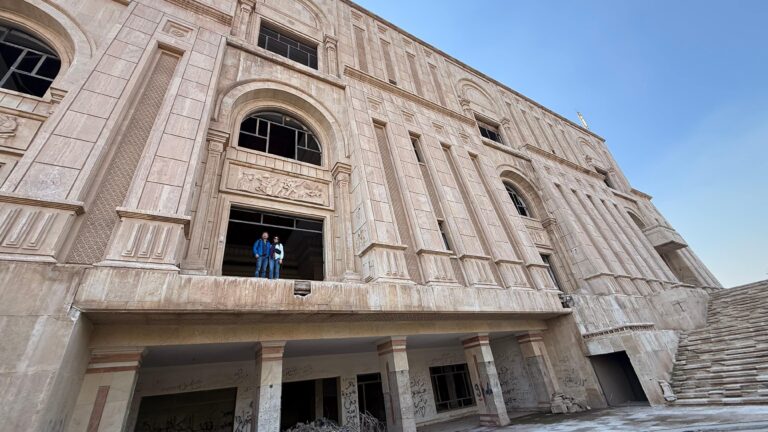
And absolutely not least, we got into Saddam Hussein’s palace at Babylon with our friend. As I’ve already mentioned, that site is closed to the public. You won’t get in on your own. If you’re hoping to go to the palace, build it into the same day as you visit Babylon, save your tickets, and remember – you’ll have to have a local friend or hire someone to take you.
We also went to our friend’s small home town, Kifl, dropped by his house, and met his family. He picked up a huge fish in Kifl’s old souk, had it grilled up, and we ate it on the banks of the Euphrates after a quick spin on a passing local’s boat. This was absolutely one of our favourite days in Iraq and captured perfectly the essence of this hospitable country and its welcoming people.
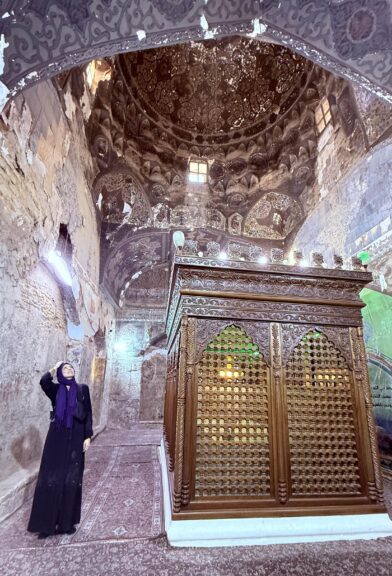
You could likely get to some of these places on public transport using Kifl as a hub. At any rate this post is the report of what we did in Iraq, so there you go.
Day 11 – Nasiriyah, Ur, and the Mesopotamian marshes
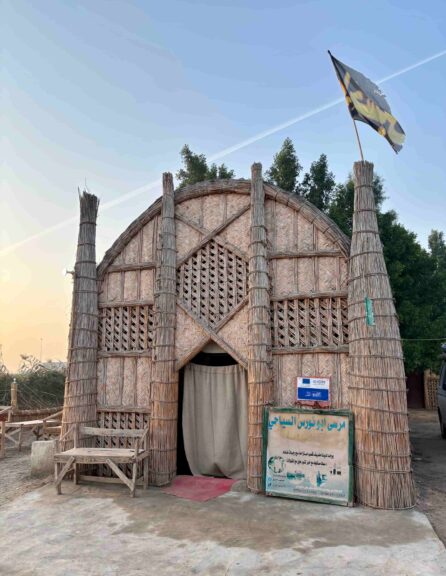
Saddam Hussein had the Mesopotamian marshes drained in the 1990s and built military access roads on top of them – despite the Marsh Arabs who had been living there for centuries at the time. After the fall of Saddam the dams diverting the Euphrates were destroyed, slowly restoring the marshes. As the water came back so did the Marsh Arabs, returning to their traditional reed houses and way of life.
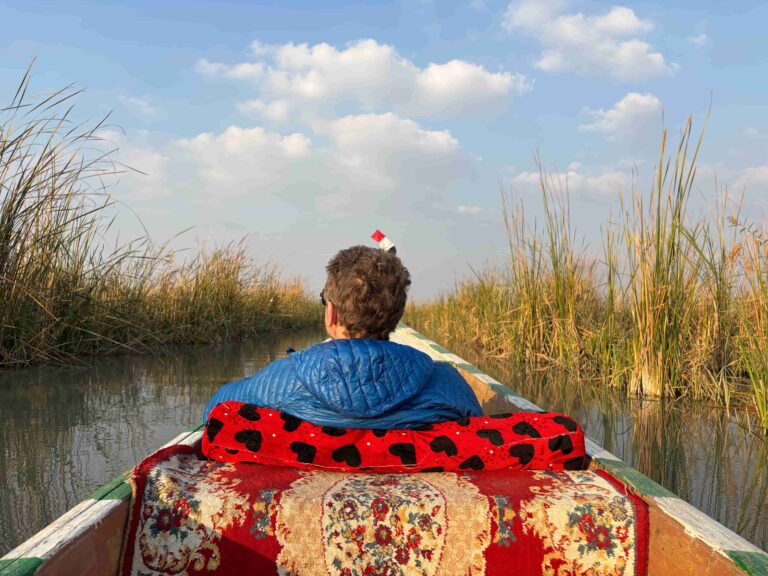
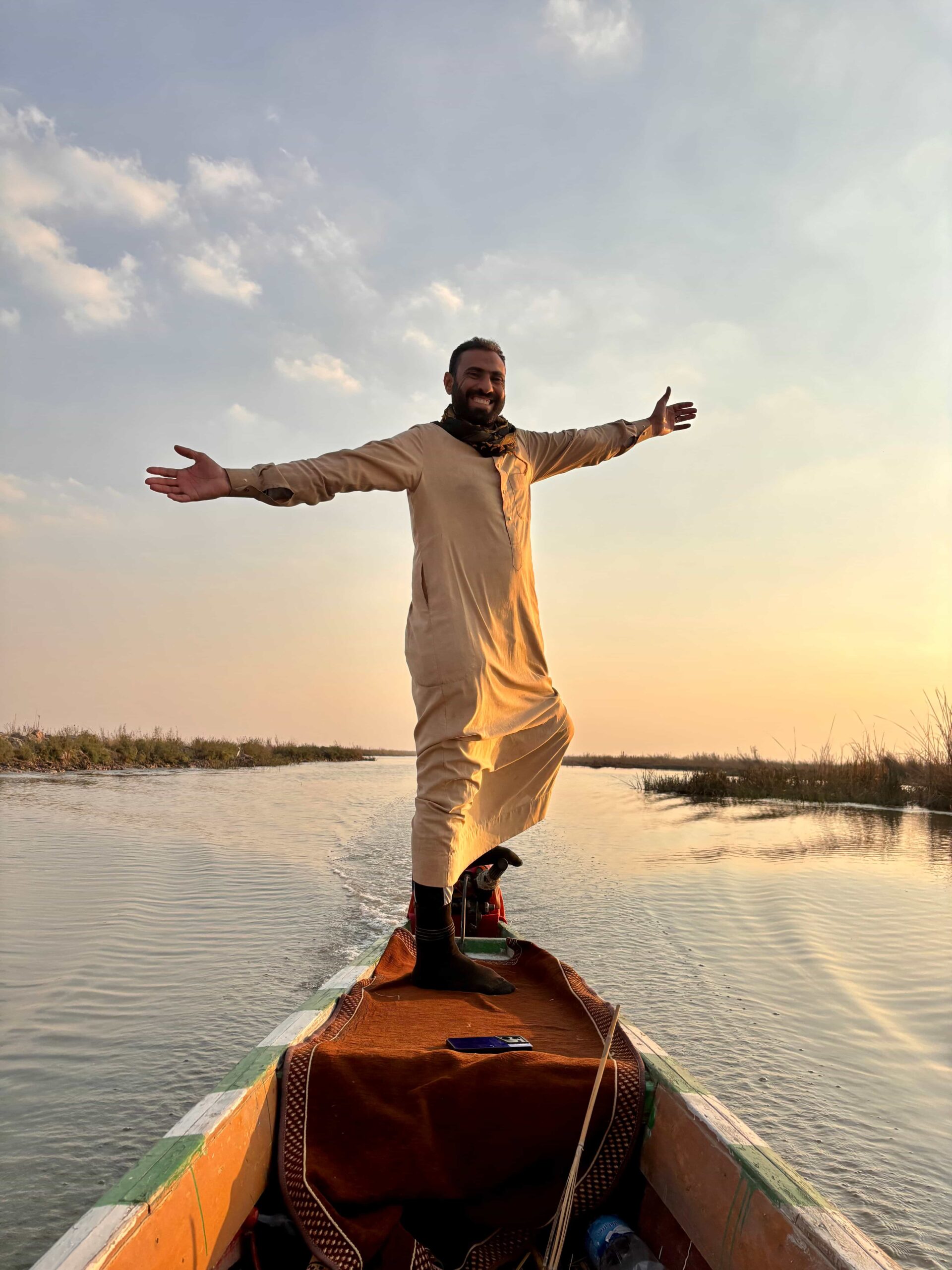
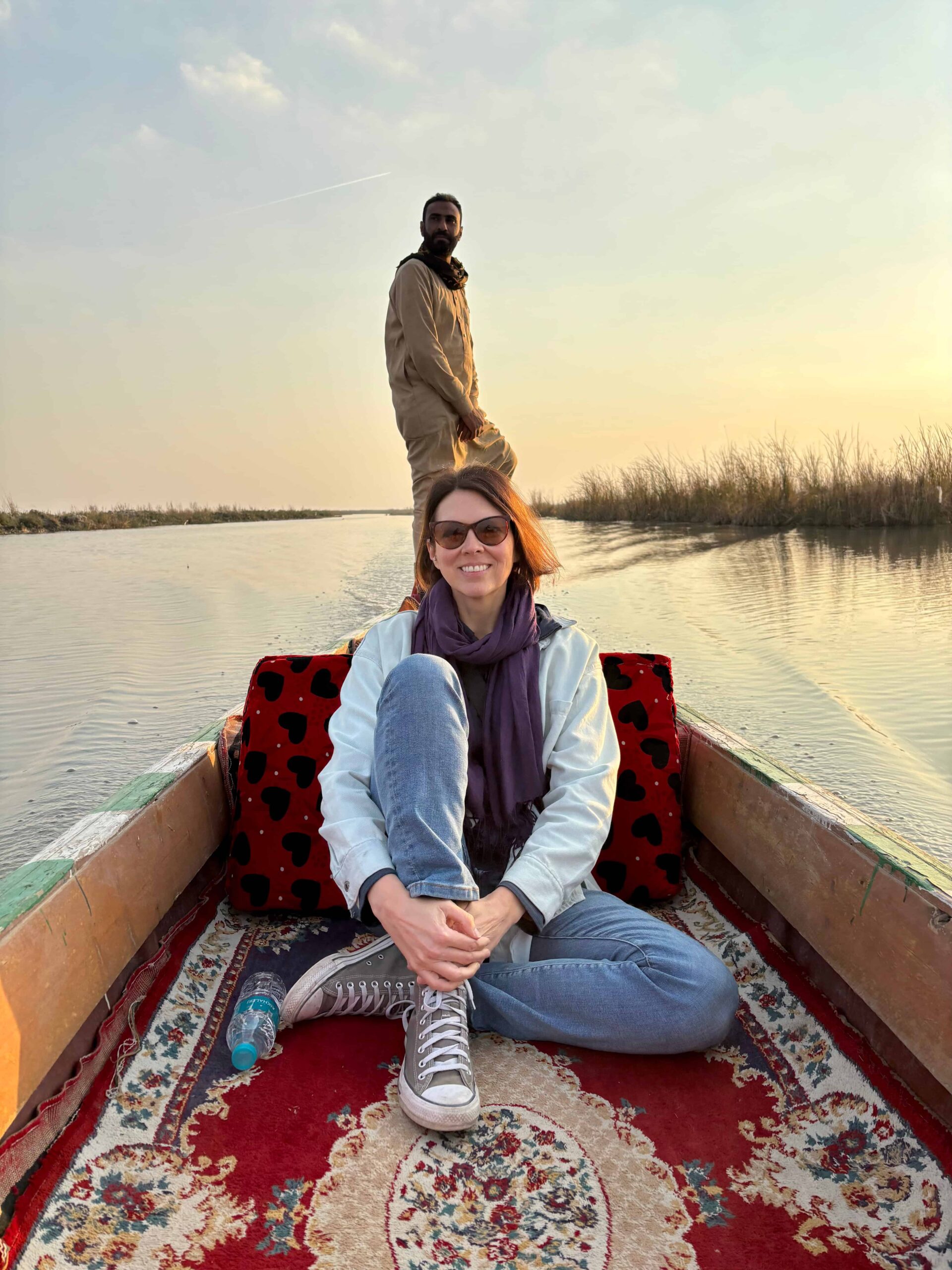
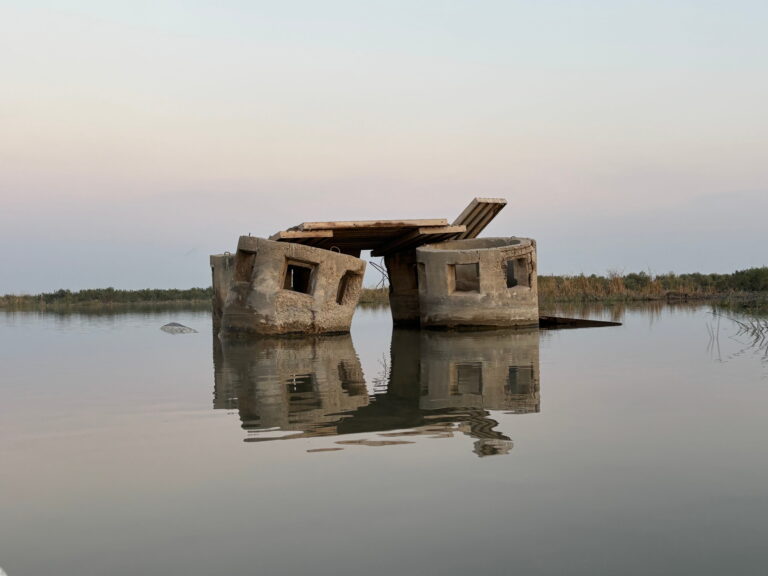
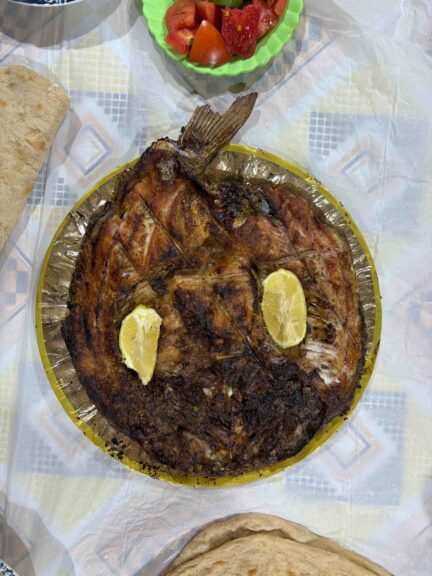
We spent a very peaceful and comfortable night at a guesthouse in the marshes. The stay included almost three hours drifting in the reeds on a long boat at sunset, with masgouf fish for dinner. And an even better breakfast, as far as I was concerned: hot fresh bread, date syrup, home made buffalo cheese and warm milk.
While we were at it, we arranged a side trip to the Ziggurat of Ur since it’s on the way. You do not need a lot of time at that site so fitting it into the trip to or from the marshes makes sense.
Where we stayed in the Marshes
All this we arranged very easily by contacting a guesthouse owner who advertises his trips in the Iraqi Travelers’ Cafe Facebook group (many do). We set it all up a day or so ahead of time over WhatsApp.
Getting to the Marshes from Najaf (via Nasiriyah and the Ziggurat of Ur)
The main point of access to the marshes is the tiny town of Al Jubayish (also called Chibayish). To get there from Najaf we went to Nasiriyah and then picked up onward transport to Al Jubayish, with a detour first to the Ziggurat of Ur.
We went to the Southern Garage in Najaf at 6 am. From there we caught a minibus to Nasiriyah for 10k dinar each. That took about four hours. At the main garage in Nasariyah there was tons of transport and tons of interest in transporting us. We arranged a private taxi there to take us to the Ziggurat of Ur, wait for us, and bring us back to the same garage (making a quick falafel stop on the way). That costs 20-25k dinar, with some haggling.
Tickets to the Ziggurat of Ur are, you guessed it, 25k dinar each. With checkpoints it took about 45 minutes driving each way. The Ziggurat is fenced off and there is not much to see let alone actually get up close to. The history there is amazing! But we ended up wishing we’d just read about it and looked at pictures, and saved ourselves the bother. We spent thirty minutes wandering around the site.
Back at the garage in Nasiriyah, it was 5k dinar each in a share taxi to Al Jubayish, which took about an hour. There we met our host and went to the guesthouse in the marshes.
Days 12, 13 – Basra
After a breakfast of local milk and cheese at the guesthouse we headed straight to Basra. Old Basra is nice for walking around, as is the corniche. The Basra Antiquities museum is supposed to be really good and we wanted to go to but it’s – surprise – 25k each. At that point we were down to our last dinars to use up exactly before leaving the country, and didn’t want to change more.
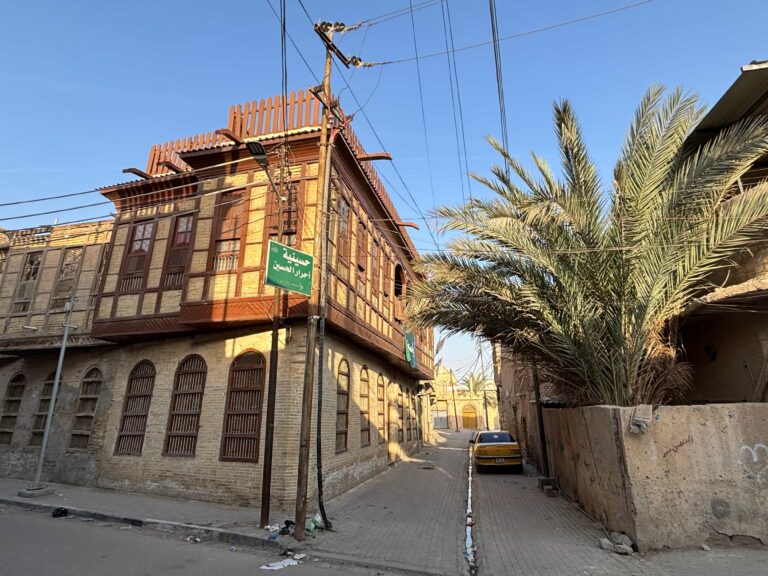
Since we were there in December, we went to the Family Park for a pretty festive Christmas Market.
Getting to Basra from the Marshes
We took a taxi for 10k dinar to the garage in Al Madina from the guesthouse in Al Jubayish. That took about thirty minutes. From Al Madina we got a minibus to Basra for 3.5k dinar each. That took two hours.
Adam’s tree and the confluence of the Tigris and the Euphrates at Al Qurnah are on the way from Al Jubayish to Basra. If we’d thought of that in advance, we’d have taken a private taxi all the way from Al Jubayish to the hotel in Basra, stopping to see those sights along the way. That would have cost about 30k dinar.
Where we stayed in Basra
We checked a couple of hotels as there are many on Google maps all in the same area. We stayed at Jandian Hotel for 20k per person including a decent breakfast.
Day 14 – the Safwan border and on to Kuwait
We got up and ate one last breakfast in Iraq at our hotel in Basra. As usual on a border crossing day we got an early start, although nothing crazy – we left the hotel around 9.30 in the morning.
Have a look at this post about getting to the Safwan border, and on to Kuwait.
Read More
Read more about independent travel in Iraq. And if you’re crossing the border to Kuwait, have a read here.
Check out the Destinations page for travel guides and stories about our off-beat adventures all over the Middle East and beyond.